How to Choose the Best Dive Instructor Course in Bali: What Actually Matters
Most people choose a dive instructor course in Bali the wrong way.
They do a quick search, look at a few websites, compare the marketing, the course length, maybe the agency, and then go with the program that looks the most polished or visible. In a place like Bali, where many dive centres are competing hard to be seen, that usually means the biggest or best-marketed shops get most of the attention.
That does not automatically mean they offer the best instructor training.
There are plenty of strong training programs that simply do not dominate the search results or social media feed. So if you are serious about becoming a dive instructor, the question is not just which course is easiest to find. It is which one will actually prepare you properly.
That is the real issue.
Because there is a big difference between passing the IE and being ready to teach well once it is over.
A lot of instructor courses are built very heavily around getting candidates through the Instructor Evaluation. Of course that matters. You do not want to arrive at the IE and find that your course prepared you loosely and left you struggling. But there is a problem on the other side too: many candidates finish their instructor course with strong scores, and then have absolutely no idea how to teach a real Open Water course properly.
That is where many people get caught with their pants down and an egg on their face!
The best dive instructor course in Bali is not the one with the biggest marketing budget, the shortest format, or the biggest name. It is the one that produces the strongest outcome: a candidate who passes confidently, teaches properly, performs to a high standard, and leaves ready to work as a real professional.
For candidates comparing real pathways rather than just marketing, our SSI Dive Instructor Course in Bali page breaks down what our Instructor Training route actually includes.
Most people choose an instructor course in Bali the wrong way
The most common mistake is simple: people do very little real research.
They see the shops that market themselves best, compare some surface-level details, and assume they have seen the field. In reality, they often have not. They are comparing only the most visible programs, not necessarily the strongest ones.
That matters because price, speed, and agency are not enough to tell you whether a course is actually good.
A course can be cheap and weak. It can be expensive and weak. It can be heavily marketed and weak. It can be very visible and still produce instructors who are not ready to teach.
Equally, a smaller, less visible program can deliver much stronger coaching, much better standards, and a far better final outcome.
So if you are trying to choose the best dive instructor course in Bali, stop asking only:
- How much does it cost?
- How long is it?
- Is it PADI or SSI?
Those questions matter, but they are not the main ones.
The better question is this:
What kind of instructor will this course actually produce?
Will you leave certified, but shaky?
Will you leave having just scraped through the evaluation?
Or will you leave genuinely ready to teach, handle students well, and work professionally?
That is the standard that actually matters.
That being said, if you do want a deeper agency-level breakdown, including course structure, real costs, renewal fees, crossover routes, and long-term career considerations, read our full comparison of the PADI vs SSI instructor course. This article however will not focus on agency breakdowns, but rather what makes a good instructor course standout from the crowd.
First define what you actually want from your instructor course
Before comparing centres, you need to be honest about what you want.
Not every candidate wants the same thing, and not every course is designed for the same purpose.
Some people want the fastest possible route to instructor level. That can make sense, but only if they are already strong. If you are already at a high Divemaster level in terms of skill quality, theory, control, and water comfort, then a fast-track format can work. If you are not, then trying to rush the process usually just creates a weak outcome.
Some people want real teaching confidence. That is a different goal. They are not only looking to pass the evaluation. They want to understand how to structure courses, how to manage students, how to brief properly, how to correct properly, and how to step into real teaching without feeling lost.
Some people want a longer development pathway. They want more shadowing, more active teaching, more time to refine skills, more time to absorb criticism, and more time to build professionalism. That is not the right fit for everyone, but for some candidates it is exactly what turns them from a certified Divemaster into a strong instructor.
Some people are also thinking ahead about employability. They want to know not only how to become an instructor, but how to become the kind of instructor dive centres actually want to hire.
That is why “best” is not just one thing. The best course for you depends partly on what you need.
But even with that said, some standards are non-negotiable. Good teaching, serious feedback, appropriate group size, strong skill quality, and real preparation for actual teaching matter in every case.
What actually makes a dive instructor course in Bali good?
If you strip away the marketing, there are three things that matter most:
the quality of the teaching, the group size, and the outcome.
If you are trying to choose the best dive instructor course in Bali, these are the factors that matter far more than marketing, speed, or agency name alone.
If you want to see how that looks in practice, our Instructor Training page shows how we structure small-group coaching, higher in-water standards, and guided progression.
Quality of teaching
This is the biggest one.
Are the Instructor Trainers actually good teachers? Are they active, precise, and current? Do they coach properly, explain properly, and correct properly? Do they understand the modern teaching system and the actual structure of the courses they are training people to teach?
This sounds obvious, but it is not.
A surprising number of trainers are very comfortable teaching the way they learned years ago. They may know what the standards used to be. They may know how things were done when they took their own IT course. But that does not automatically mean they are current, sharp, or teaching in the best way now.
If a trainer is not up to date with standards, materials, academic systems, and skill teaching structure, the candidate suffers.
And if the trainer is mostly “delivering” the course instead of actively teaching it, the candidate suffers even more.
Group size
Group size is massively underestimated.
For instructor development, very large groups are a problem. You get less personal attention, less repetition, less correction, and less space to develop properly.
At the same time, 1:1 is not ideal for everything either. You lose some of the peer dynamic, buddy practice, and teaching interaction that helps people learn.
In our view, the sweet spot is usually 2 to 4 candidates. That gives enough practice dynamic while still allowing very close coaching.
Once you get much beyond that, the quality of the learning experience starts to deteriorate.
The outcome
This is the point many people overlook.
Did you pass the IE? Good. That matters.
But were you prepared properly to begin teaching after that?
Could you structure a real course? Could you manage multiple students? Could you adapt to different conditions? Could you deliver strong demonstrations, run briefings well, stay composed, and behave like a real professional?
If the answer is no, then something is wrong with the course, even if the certification was awarded.
High standards, not minimum standards
Minimum standards are exactly that: a minimum.
They are not what you should aim for.
A serious instructor course should train above the minimum, not right on top of it. If the training philosophy is built around “good enough to pass,” then the outcome will usually reflect that.
Strong programs push candidates toward mastery, not bare sufficiency.
Real-world preparation, not just IE preparation
A lot of courses focus too intently on the evaluation. The whole course becomes about getting through the IE.
The problem is that real instruction starts after that.
If all the training is built around exam format and almost none of it is built around how to actually teach well, then the candidate often gets certified and only begins learning how to be an instructor once they start working.
That is backwards.
The best courses start developing real teaching ability during the course, not after it.
What separates a weak instructor course from a strong one?
Not all dive instructor courses in Bali are equal, and here are some things to look out for when comparing programs.
What to compare | Weak course | Strong course |
|---|---|---|
Teaching quality | Mostly delivery, little real coaching | Active coaching, correction, and explanation |
Group size | Large groups with less attention | Small groups, usually around 2-4 candidates |
Standards | Minimum-standard mentality | Training well above minimum-standards |
Skill quality | Good enough to pass | Demonstration-level mastery |
Course focus | Pass the IE | Pass confidently and become ready to teach |
Outcome | Certified | Certified and professionally prepared |
Passing the IE matters; but it should not be the only goal
This is one of the biggest problems in professional dive training.
There are many instructor courses where the entire structure revolves around the evaluation. That makes sense to a point. The IE is important. It is stressful, it costs money, and failing it is not something anyone wants.
But there is a big difference between:
- training in a serious way that makes the IE feel manageable
and - narrowing the whole course down to the minimum required to get through it.
Those are not the same thing.
Many candidates come out of instructor training having passed with strong marks, and yet they do not understand how to teach a real entry-level course properly. They do not know how to structure things well, how to handle different student dynamics, how to adapt to varying conditions, or how to carry themselves with the level of professionalism that the role actually requires.
That should not happen.
A strong course should prepare you so well that the IE feels easier than expected, not because the evaluation is easy, but because your standards are already higher.
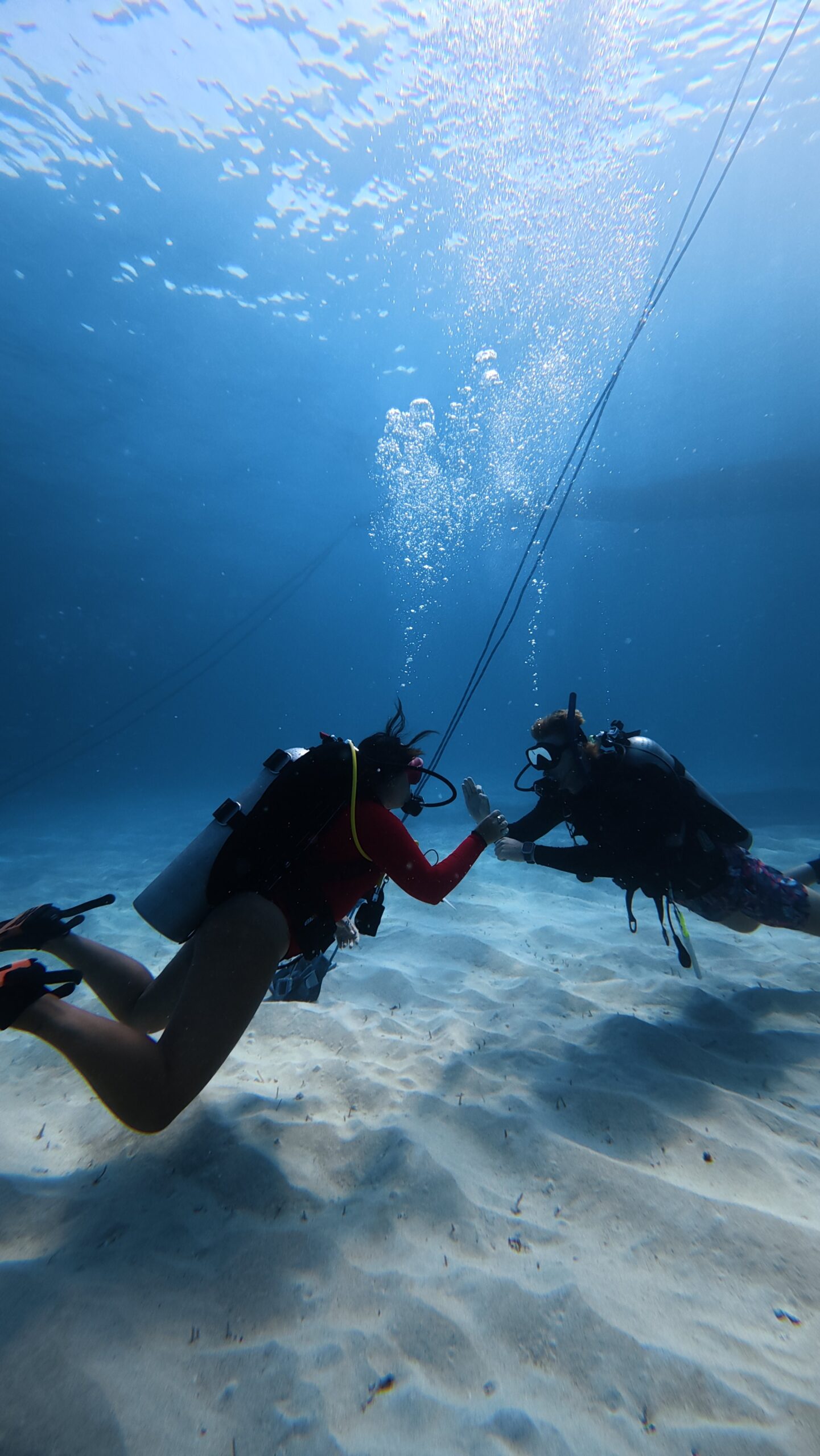
At Project Laut, that is exactly how we approach our SSI Dive Instructor in Bali. We train well above minimum standard. We treat minimum standards as exactly that: a minimum. Candidates are expected to perform skills neutrally buoyant, in the diving position, and to a very high standard. They get access to readings beforehand. We follow the SSI material properly. We incorporate active learning. Candidates take on active teaching roles during the course. We score strictly.
That is not done to make the course harsher for the sake of it. It is done so that when the time comes for the IE, the evaluation feels controlled and manageable rather than overwhelming.
The last thing you want is a relaxed course that loosely prepares you, only for the IE to feel like a wall when you get there.
And just as importantly, the last thing you want is to pass and then discover that you still do not know how to teach.
Professional development should begin during the course itself. That means learning how to structure courses, handle multiple people, work in varying conditions, understand the job market, and develop real professionalism.
That matters. A lot.
Course length matters and very short instructor courses are usually a bad sign
This is another area where candidates often get misled.
A very short instructor course is usually not good.
There is no point dressing that up.
If you see a course being pushed in 7 or 8 days, that is almost certainly too short for meaningful development. At that point the program is almost always focused on getting the candidate through the IE with very little room for deeper skill development, teaching confidence, or professionalism.
That does not mean every shorter format is automatically bad.
A fast-track can work. But it depends on the candidate, and it depends on the actual structure.
At Project Laut, for example, we offer a 2-week intensive training format. But that does not mean we think all short formats are equal. A 2-week intensive only makes sense if the candidate is already genuinely strong at Divemaster level in both skill and theory. If they are not already confident and capable, then speed becomes a liability.
That is why readiness matters more than speed.
We also require a 5-day skill refresher for candidates who are not already at the necessary level. That is not a sales gimmick. It is a best practice. In fact, it is a red flag if a centre does not ask deeper questions about the candidate’s actual starting point or has no real structure for dealing with underprepared candidates (which is unfortunately incredibly common in our experience).
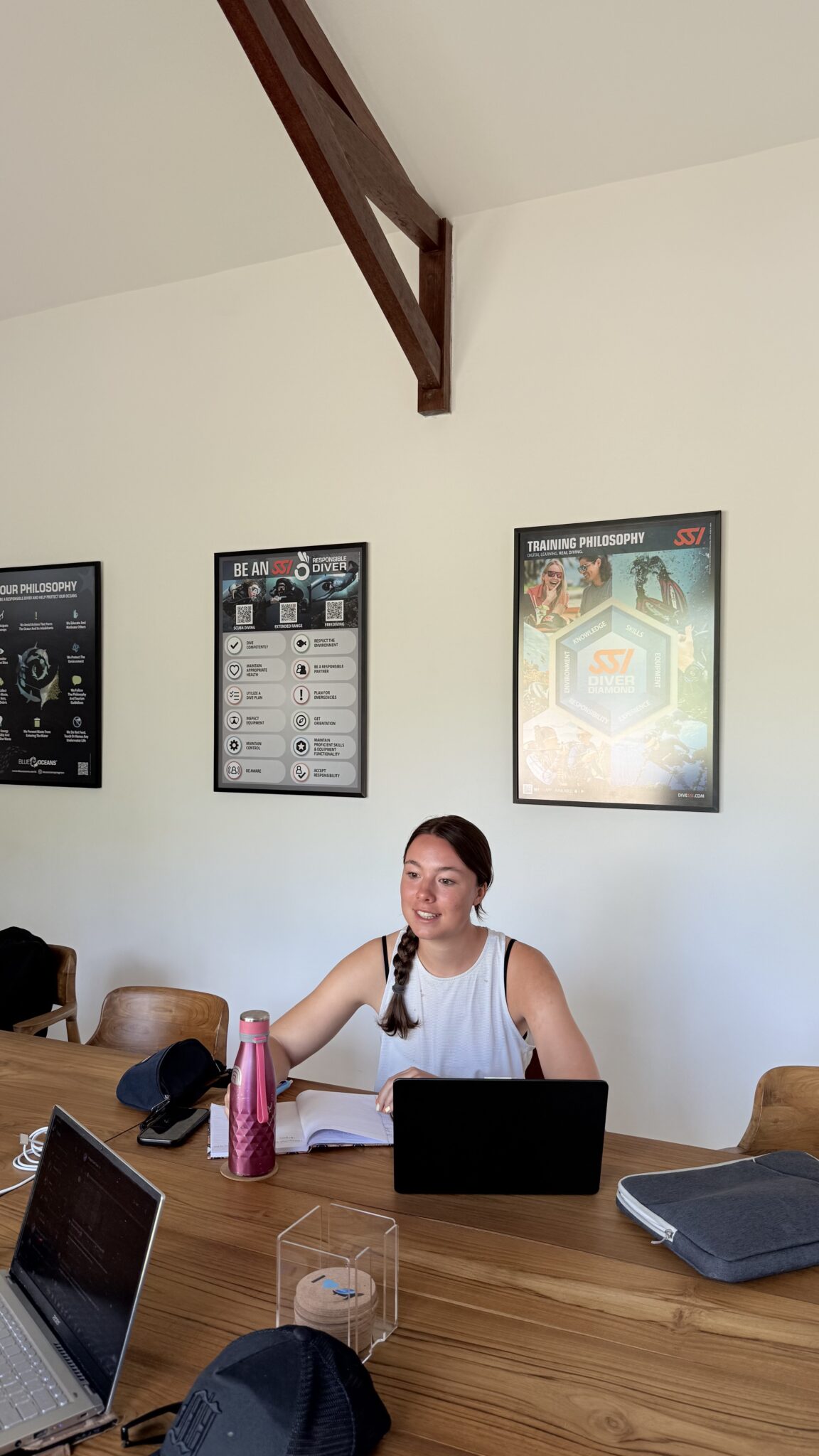
We have seen too many “Divemasters” arrive on day one of an instructor course unable to perform basic skills properly, or not even familiar with core elements they should already know. That is not something a serious centre should ignore.
A proper program should identify that and deal with it.
Longer or extended pathways, meanwhile, give more room for real growth. They allow more shadowing, more active teaching, more time to absorb feedback, and more time to build professionalism. For some candidates, that makes a major difference.
The idea that faster is always better is simply wrong.This is one of the biggest problems in professional dive training.
Look carefully at course inclusions and hidden fees
This is another area where candidates make bad comparisons.
A lot of people look only at the sticker price of an instructor course and assume that is the real cost. Very often, it is not.
In some cases, the advertised price does not include major items such as the instructor evaluation fee, first aid instructor certification, instructor materials, wetnotes, or other required components. Once those are added in, the real price of the course can end up being dramatically higher than what was advertised. In some cases, the final cost can be up to 50% more than the original headline price.
That is why it is important to compare courses based on the true all-in cost, not just the number used to get your attention.
In our view, professional-level courses should be advertised as clearly and transparently as possible. If there are extra costs, they should be obvious from the start, not revealed after the candidate is already deep in the process.
When comparing instructor courses, always ask exactly what is included and what is not. In general, accommodation is often not included unless clearly stated. But your core instructor pathway should clearly specify whether the price includes the Open Water Instructor certification and the base certifications that come with it, such as Nitrox, Perfect Buoyancy, Rescue, Advanced, and Dive Guide, along with any required components, materials, and evaluation fees.
If a centre is vague about the real cost, that is a red flag.
What should a good dive instructor course in Bali actually include?
If you are comparing programs, there are certain things that should be present in any serious instructor course.
It should include access to learning materials in advance so the candidate can arrive prepared instead of cold.
It should make proper use of the agency’s official materials, not treat them as an afterthought.
It should include active learning sessions, not just passive delivery in a classroom.
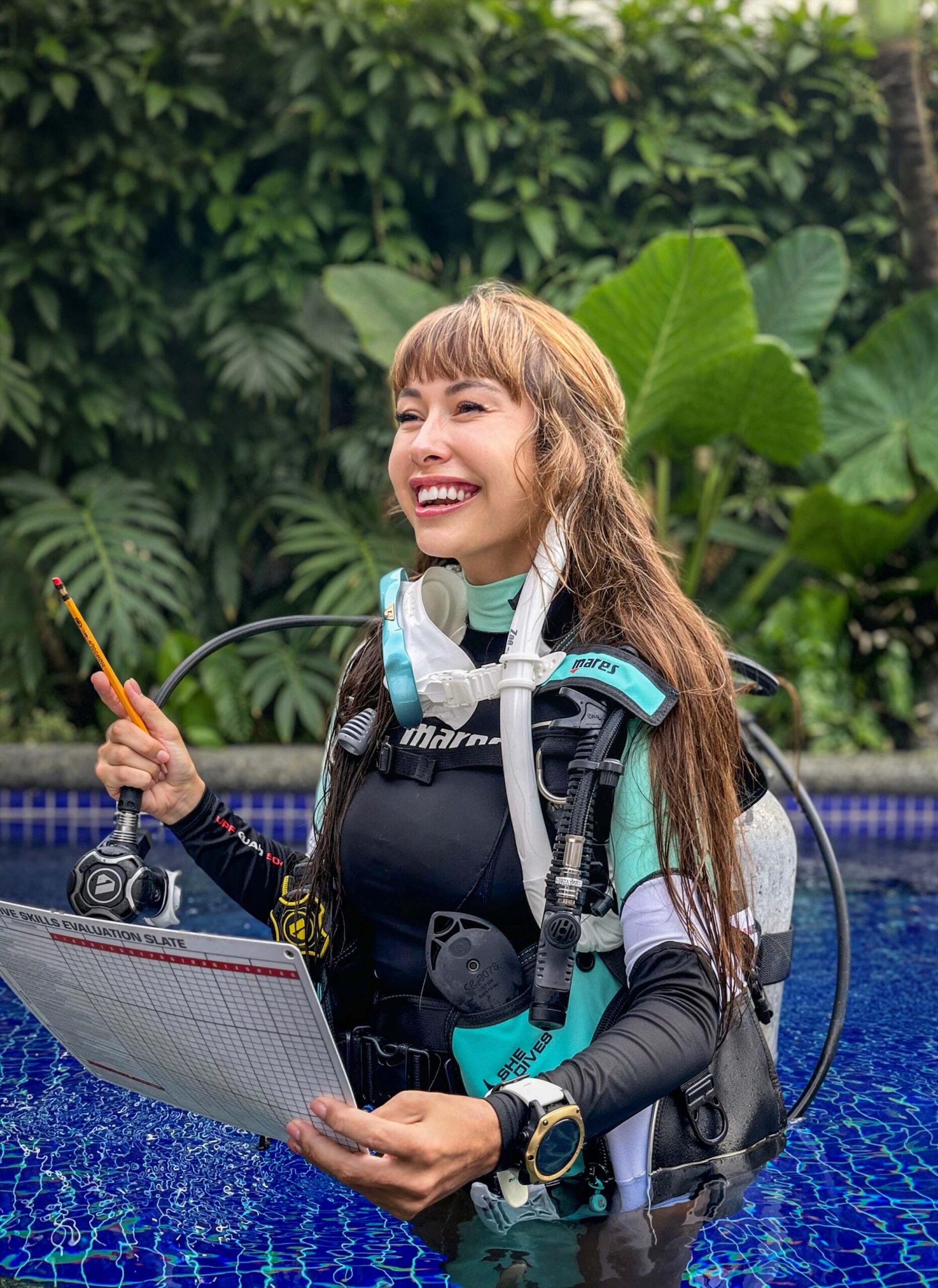
It should involve real teaching practice, with candidates taking on active roles rather than simply observing and repeating.
It should include proper skill video analysis and detailed correction. This matters enormously because many candidates think they are performing at a demonstration level when they are not.
It should include demonstration-level skill refinement. Not “good enough to scrape through,” but real refinement.
It should include guidance on how to use instructor tools and materials properly, such as instructor manuals, cue cards, academic systems, and course structure. A surprising number of candidates get through training without ever being taught how to use these resources well.
And it should include preparation for different teaching conditions and formats. Teaching in a static, idealized scenario is not the same thing as teaching with different group sizes, different student abilities, or different environmental factors such as swell or drift.
A serious instructor course should be training you to function in the real world, not in a narrow artificial bubble.
That is also why our Instructor Training pathway is built around active learning, structured coaching, and stronger teaching readiness rather than just evaluation prep.
What should be included in a serious instructor course in Bali?
There are some important inclusions you should look our for when comparing dive instructor courses in Bali – here is a table that outlines some of the most important, in our opinion, and why they actually matter.
Included element | Why it matters |
|---|---|
Learning materials in advance | Lets candidates arrive prepared and ready |
Structured theory coaching | Builds consistency and confidence |
Active learning sessions | Improves retention and teaching ability |
Skill video analysis | Speeds up meaningful correction |
Demonstration-level skill work | Builds real instructional quality |
Use of instructor tools and materials | Prepares candidates for actual teaching |
Strict scoring and feedback | Prevents false confidence |
Prep or refresher structure for weaker candidates | Show the centre takes standards seriously |
Small groups matter more than most people think
This deserves its own section because it is one of the clearest quality indicators in instructor development.
If the group is too large, people inevitably get less attention. There is more waiting, less repetition, less detailed correction, and less space for the trainer to actually develop each candidate properly.
That has a direct effect on the outcome.
At the other extreme, 1:1 is not always ideal either. You lose the natural practice dynamics that come from having another candidate to work with. There is value in peer interaction, observing each other, buddying properly, and practicing together.
That is why the sweet spot is usually 2 to 4 candidates.
That is where you get the best balance of interaction and personal attention.
If a centre is routinely running very large instructor groups, that should make you cautious. There is a reason the term instructor factory exists. Such places can usually get people through the system, but that is not the same as producing strong professionals.If you are comparing programs, there are certain things that should be present in any serious instructor course.
At Project Laut, our Instructor Training pathway is intentionally built around small groups because that is where instructor development is strongest.
PADI vs SSI matters less than most people assume
This is a big topic, and it deserves its own article in full. But for the purpose of choosing the best instructor course in Bali, here is the truth:
Agency matters less than a lot of people think.
In the past, PADI had a much more dominant global market share, and that shaped a lot of the old thinking. There was a long-running assumption that PADI automatically meant better employability and that SSI was somehow a weaker option. That thinking is increasingly outdated.
Today, SSI and PADI are much closer than they used to be. In many regions, SSI is already dominant or very strong, while in others PADI still has more market share. So the better way to think about this is not, “Which agency is universally better?” but, “Which agency is stronger in the part of the world where I want to work?”
That should be the first question.
After that, look at the teaching systems, the course structure, and the actual quality of the training. Those things will usually matter far more to your long-term outcome than the logo on the certification card.
A lot of outdated advice around this topic came from the old crossover logic. For years, many candidates saw the smart move as doing a PADI instructor course first and then crossing over quickly into SSI. That idea became popular because it was once viewed as a relatively easy way to end up with both agencies and keep more options open.
The problem is that many people are still giving advice based on that older pathway, even though the crossover landscape has tightened significantly. SSI officially introduced mandatory Instructor Evaluations for crossover candidates from certain agencies in July 2024, specifically to raise standards and prevent overly accelerated crossover routes, and SSI also announced further crossover changes effective mid-2025 that required candidates to attend a full ITC, with only the IE fee being reduce. Effectively, this means outside candidates must complete a full ITC, and the old pathway has been shut.
So the old mindset of “just do one agency first, then switch over quickly and cheaply later” is no longer something candidates should assume.
The decision now needs to be made more carefully. Instead of asking which route looks cheaper or easier on paper, candidates should be asking:
- Where do I want to work?
- Which agency is stronger there?
- Which training system do I prefer?
- Which course will actually produce the strongest instructor?
And more importantly, candidates need to stop assuming that agency name by itself determines employability. It does not.
A strong instructor from a serious course is far more valuable than a weak instructor who happened to choose the “right” logo.
Why Bali is a strong place to become a dive instructor
Bali is a genuinely strong place to do instructor training for several reasons.
First, the overall training environment is good. Bali has a robust dive industry and a strong pipeline of courses taking place year-round, which means professional-level training is well established.
Second, the lifestyle matters. It would be dishonest to pretend it does not. Bali is an enjoyable place to live and train, and that is part of why people come. That does not replace training quality, but it does make Bali an attractive and sustainable place to spend a serious training period.
Third, Bali is a major diving hub. That creates practical value. If you want to begin working soon after certification, Bali gives you access to a strong local industry and a lot of professional networking exposure.
So yes, Bali is a good place to become a dive instructor. But as always, that still depends on choosing the right course.
What makes Nusa Penida a strong place for pro-level development?
Nusa Penida is strong for many of the same reasons Bali is strong, but it adds something else.
It builds professionalism.
That said, it is worth being honest here. On a short fast-track course, you do not actually spend that much time diving in the ocean. Much of the time is spent in the classroom, pool, and confined-water style training environments. So if you are only doing a fast-track, location matters less than some people imagine.
But on an extended pathway, Nusa Penida becomes much more valuable.
That is where you are exposed to changing conditions, group control challenges, real communication demands, site selection decisions, and the fact that even when you make the right call, a dive can still go sideways and require a serious debrief afterwards.
That is where strong professionalism and leadership are built.
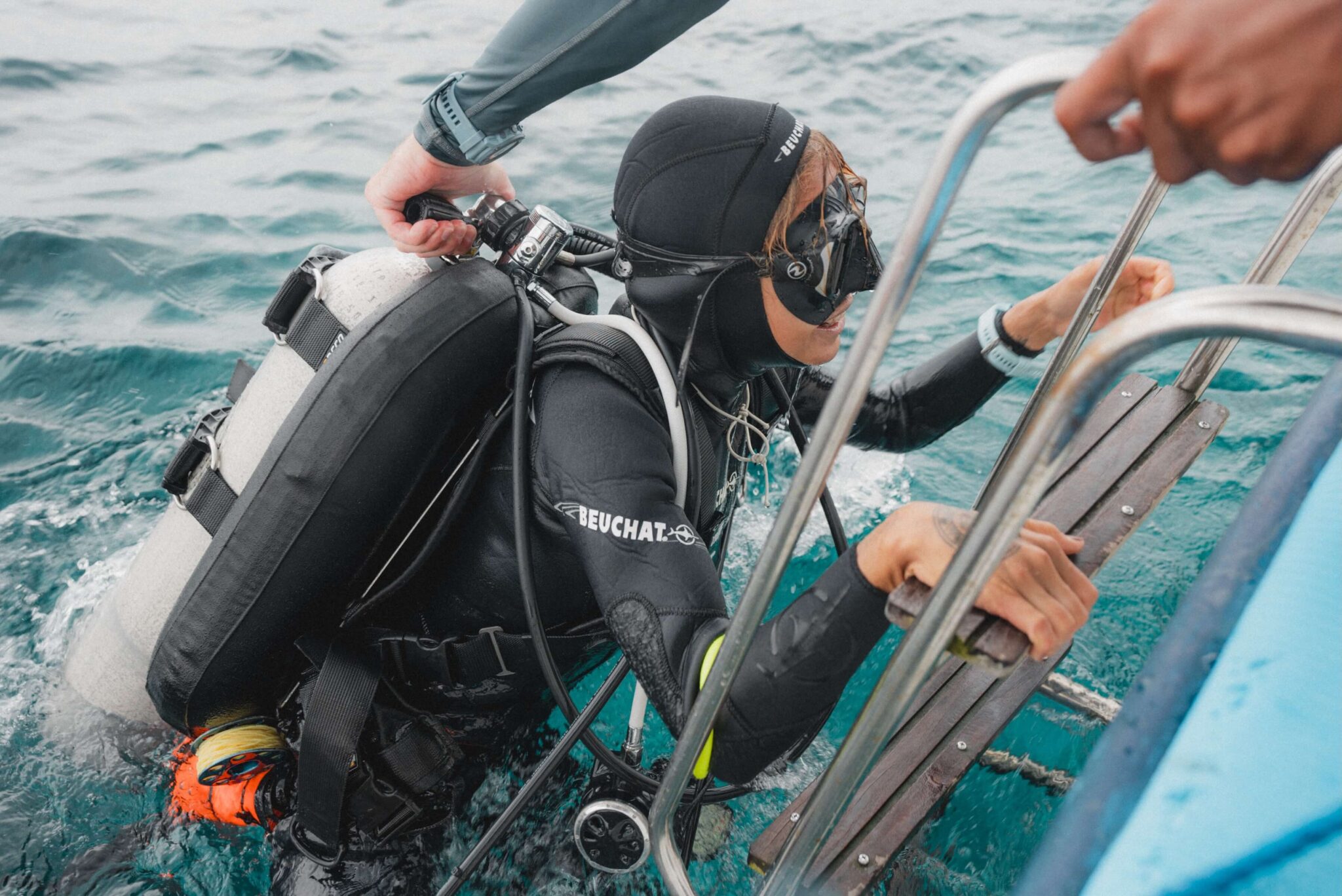
Having to make the right decision under pressure, in a dynamic environment, while managing people properly, and then having the maturity to sit down after the dive and debrief honestly if something did not go well; that is real professional development.
That is one of the reasons Nusa Penida is such a strong place for longer pro-level pathways.
Red flags when choosing an instructor course in Bali
There are a few major red flags that should make you cautious.
Instructor factories
If a centre is running instructor courses continuously, with large groups, and turning out instructors in high volume, be careful.
That kind of operation can usually get people through the process. But will the candidate come out truly ready to teach? Often, no.
You may pass. But that is not the only question.
Courses sold mainly on speed
If the biggest selling point is how fast you can become an instructor, that should immediately make you slow down.
Very short formats often mean one thing: the course is focused heavily on getting through the IE, with limited room for deeper development.
Large group sizes
Large groups dilute the quality of the training. That is simple. Less attention, less correction, less real development.
Weak focus on actual teaching
If a course talks endlessly about passing the evaluation but says very little about how candidates are prepared to teach real courses afterward, that is a warning sign.
Outdated trainers
Do not assume that because someone has been around a long time, they must automatically be the best teacher.
That is not how it works.
Some long-time trainers are outstanding. Others rely too heavily on the old way, are not fully current with modern systems and materials, and do not teach the academics, resources, or course structures as well as they should.
“Older” does not automatically mean “better.”
No real system for underprepared candidates
This one matters a lot.
If a centre does not ask deeper questions about your actual level before the course, or has no clear plan for what happens if you arrive below standard, that is a red flag.
A serious centre should care whether you are ready.
What questions should you ask before booking?
If you want to compare properly, ask better questions.
Ask whether the Instructor Trainers are fully up to date with current standards, materials, and teaching systems.
Ask how many candidates are usually in the group.
Ask how skills are analysed and corrected. Do they use video? Do they break down the details? Do they score strictly?
Ask whether the course includes real training on how to use instructor materials properly, such as manuals, cue cards, and course structure tools.
Ask whether you will be shown how to teach in different conditions and with different group situations.
Ask what happens if you arrive below demonstration-level standard. Is there a refresher structure? Is there a preparation block? Or do they just throw everyone straight in and hope for the best?
And most importantly, ask whether the course is designed simply to get candidates through the IE, or whether it is designed to produce strong instructors who are actually ready to teach afterward.
That one question alone will tell you a lot.
Smart questions to ask before booking an instructor course in Bali
Asking the right questions can help you make an informed choice between a weak course and a strong course.
Question | Why it matters |
|---|---|
Are your Instructor Trainers fully up to date with current standards and resources? | Outdated trainers weaken the course |
How many candidates do you train at once? | Group size affects feedback and development |
How do you analyze and correct skills? | Shows whether skill development is superficial or serious |
Do you teach candidates how to use instructor materials properly? | Essential for real-world teaching |
What happens if someone arrives underprepared with skills or theory? | Reveals whether standards are real and serious |
Do candidates take active teaching roles during the course? | Shows whether the course develops real instructors |
Is the course focused only on passing the IE, or also on being ready to teach afterwards? | One of the biggest differences between a weak and strong program |
Common mistakes people make when choosing and instructor course
One of the biggest mistakes is choosing based on visibility alone. People assume that the centre they see the most must be the best one. That is simply not true.
Another mistake is assuming bigger automatically means better. Sometimes it does not. Sometimes it just means better marketing and higher throughput.
Another is assuming the older the Instructor Trainer, the better the course. That logic is lazy. What matters is whether the person teaches well, stays current, uses the tools properly, and can genuinely develop candidates.
Another is assuming that PADI is always more employable. That view lags behind reality.
And another very common mistake is choosing based only on speed or price, without thinking seriously about the outcome.
That is how candidates end up certified, but underprepared.
What makes someone more employable after an instructor course?
Employability is not only about agency. It is about whether you are actually good.
A candidate becomes more employable by being genuinely ready to teach, not needing constant hand-holding, behaving professionally, and bringing value beyond the bare minimum.
Specialties matter too. React Right matters. Deep Diving, Navigation, and Night & Limited Visibility all strengthen an instructor’s usefulness, especially when higher-level courses come into the picture.
And increasingly, broader profile matters as well.
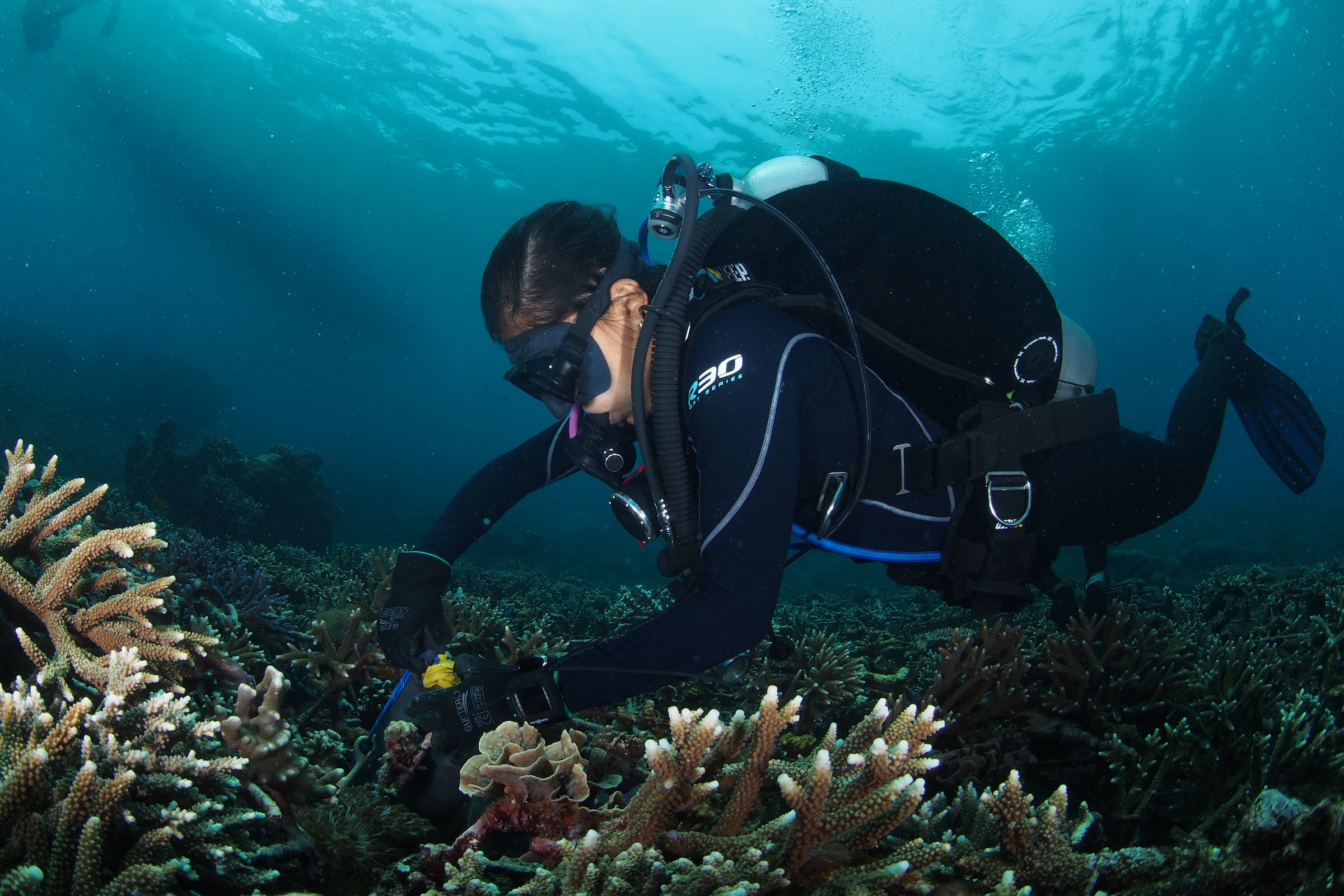
As conservation becomes a bigger part of how dive centres market themselves, ecology knowledge and conservation experience become more useful in the job market. Dive centres are increasingly aware that many tourists care about sustainability, conservation, and marine awareness. So being able to contribute in that area can strengthen a candidate’s value.
That should not replace instructor quality. It comes after it.
But in today’s market, it can absolutely be an advantage.
This is one of the areas where Project Laut’s wider model adds something valuable. Strong instructor development remains the priority, but conservation literacy and ecology-focused experience are increasingly relevant in the real world too.
Who this kind of instructor pathway is best for
A strong instructor pathway is best for someone who is ready to learn.
Someone who is coachable. Someone who can take criticism. Someone who wants real standards and actually cares about becoming a good professional.
That kind of person usually grows fast.
The worst fit is someone who thinks they already know it all.
A huge ego is a bad sign in instructor development. So is resistance to guidance. So is the attitude of wanting the badge more than the growth.
If someone only wants to become an instructor as fast as possible and has very little interest in developing properly, they should be honest with themselves about that. But they should also understand what that often leads to: a weak foundation.
A simple 5-step framework for choosing the best dive instructor course in Bali
Here is a simple 5-step framework you can use when looking into different dive instructor courses in Bali. This framework will work whether you are looking into a PADI IDC/PADI instructor course, or an SSI ITC/SSI instructor course.
1. Look past the marketing
Do not assume the most visible course is the best one.
2. Compare teaching quality, group size, and standards
These three things matter more than most candidates realize.
3. Ask whether the course prepares you to teach, not just pass
This is one of the biggest dividing lines between weak and strong programs.
4. Match the course format to your actual starting point
If you are not already strong, rushing the process is usually a mistake.
5. Choose the program that gives you the strongest outcome
The right course is the one that leaves you ready to work, teach well, and behave like a real professional.
Final thoughts
The best dive instructor course in Bali is not the one that is easiest to find, fastest to finish, or cheapest to book.
It is the one that leaves you genuinely ready to teach with confidence, competence, and professionalism.
That means looking past the marketing. It means asking better questions.
It means paying attention to teaching quality, group size, standards, and whether the program is producing instructors or just processing candidates.
If that is what you are looking for, then a small-group, standards-driven training environment will usually serve you far better than a large instructor factory.
At Project Laut, that is exactly how we approach our Instructor Training pathway and SSI Dive Instructor Course in Bali. We train well above minimum standard, keep group sizes small, focus heavily on real teaching readiness, and build the course so candidates arrive at the IE prepared, confident, and capable.
That is what good instructor training should do.
Frequently asked questions about choosing a dive instructor course in Bali
How long should a good dive instructor course in Bali take?
It depends on your starting point. A fast-track can work for a strong candidate, but very short formats are usually a bad sign. If someone still needs significant refinement in skill or theory, they usually need more than a compressed course.
Is Bali a good place to become a dive instructor?
Yes. Bali offers a strong training environment, a major dive industry, a good lifestyle, and strong local job potential. But the quality of the actual course still matters far more than the destination alone.
Is PADI or SSI better for becoming a dive instructor?
Neither is automatically better in every case. The smarter approach is to look at where you want to work, see which agency is stronger there, and then compare the actual quality of the training. Agency matters less than many people assume.
Candidates also need to be aware that recent SSI crossover changes mean old ‘do one first, switch later’ advice is no longer valid.
Are fast-track instructor courses a good idea?
They can be, but only for strong candidates. If a fast-track is extremely short (usually between 9-14 days), and if the candidate arrives underprepared, the result is often weak professional development.
What should be included in an instructor course package?
At minimum: pre-course materials, theory support, active learning, skill analysis, real teaching practice, use of instructor resources, strict feedback, and a clear plan for underprepared candidates. Instructor courses should also be transparent with fees, including whether the package covers the IE fee, instructor materials, and any required first-aid-instructor component such as EFR Instructor or React Right Instructor.
What group size is best for an instructor course?
In our view, around 2 to 4 candidates is ideal. That gives enough interaction and buddy practice while still allowing strong personal attention.
What makes one dive instructor course better than another?
The biggest differences are usually the quality of the teaching, the group size, the standards being applied, and whether the course prepares candidates to actually teach rather than only pass the evaluation.