
Marine Conservation Projects in Bali
Project Laut’s marine conservation projects in Bali combine coral reef restoration, sea turtle monitoring, and fish survey training in Nusa Penida. Built around active fieldwork, long-term monitoring, and ecology education, these projects give divers practical ways to contribute to marine conservation in Bali.
Marine Conservation Projects in Bali with Measurable Value
Project Laut runs marine conservation projects in Bali that are built around active fieldwork, long-term monitoring, and practical ecology education. Based in Nusa Penida, our work focuses on coral reef restoration, sea turtle monitoring, and REEF.org fish survey training, giving divers structured ways to participate in marine conservation in Bali while developing real in-water conservation skills.
Impact Of Our Marine Conservation Projects in Bali
Project Laut’s conservation projects are designed to create measurable outcomes over time, with active projects that continue to grow through training, field participation, and long-term monitoring.
1,500+
Coral Structures Planted
24,000+
Coral Fragments Attached
1,800+
Logged Turtle Sightings
Core Marine Conservation Projects in Bali
Project Laut’s marine conservation projects in Bali are built around three active pillars: reef restoration, sea turtle monitoring, and fish survey training. Together, they create a framework for practical fieldwork, long-term data collection, and ecology education in and around Nusa Penida.
Coral Reef Restoration
Hands-on coral reef restoration in Bali focused on active coral reef restoration, coral fragment attachment, coral reef restoration site maintenance, and long-term site care.

REEF.org Roving Fish Surveys
Fish identification and reef survey training that supports species knowledge, monitoring skills, and field-based data collection.

Sea Turtle Identification
Long-term monitoring and identification work built around individual identification, sighting logs, and repeated field observations.


Coral Reef Restoration in Bali
Project Laut’s coral reef restoration work in Bali combines active site development, long-term maintenance, and practical field methods that support reef recovery over time.
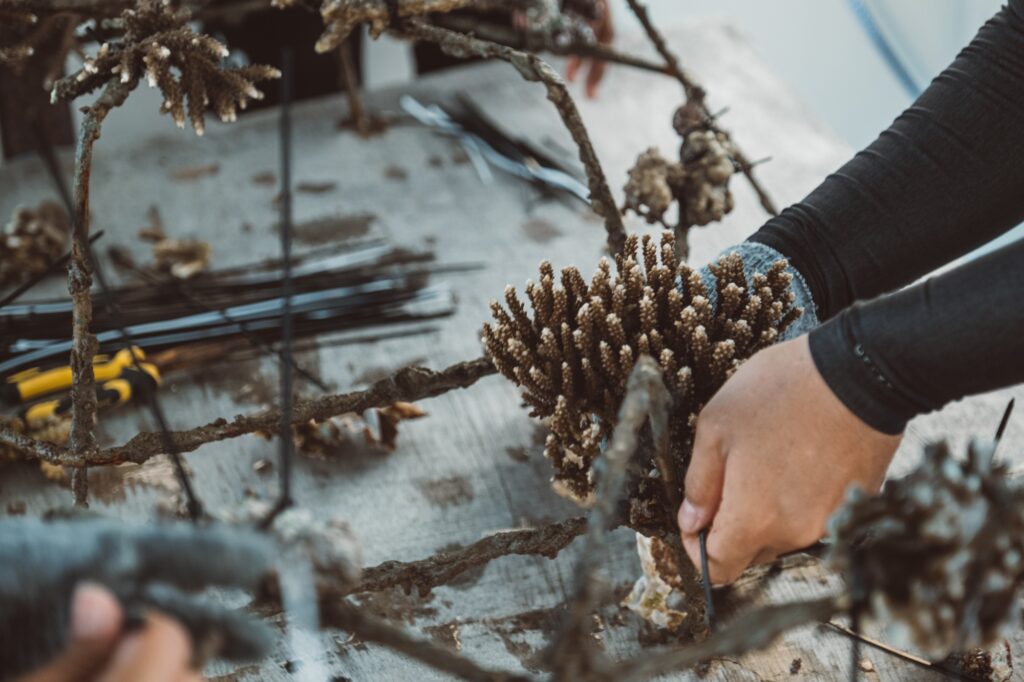
Coral reef restoration is one of the core marine conservation projects in Bali at Project Laut, done in partnership with GoOcean. Based in Nusa Penida, this work focuses on restoring damaged reef areas through coral structure planting, coral fragment attachment, site maintenance, and follow-up monitoring. Rather than treating restoration as a one-off activity, we approach reef restoration in Bali as an ongoing field process built around repetition, care, and measurable progress.
Participants are introduced to practical coral restoration methods used in the water, including coral selection, fragment attachment, structure preparation, and long-term maintenance of restoration sites. This makes the project valuable both as hands-on marine conservation in Bali and as a training environment where divers can develop a more practical understanding of how coral reef restoration actually works over time.
Our coral restoration work in Nusa Penida is designed to create meaningful project value while also giving participants direct involvement in field-based conservation. Through repeated site visits and structured in-water work, divers see how reef restoration in Bali depends not only on installation, but on monitoring, maintenance, and long-term commitment.
1,500+
Coral Structures Planted
24,000+
Coral Fragments Attached
REEF.org Fish Survey Training in Bali
Project Laut’s REEF.org fish survey training in Bali introduces divers to reef fish identification, structured survey methods, and practical ecology skills that support long-term marine monitoring.
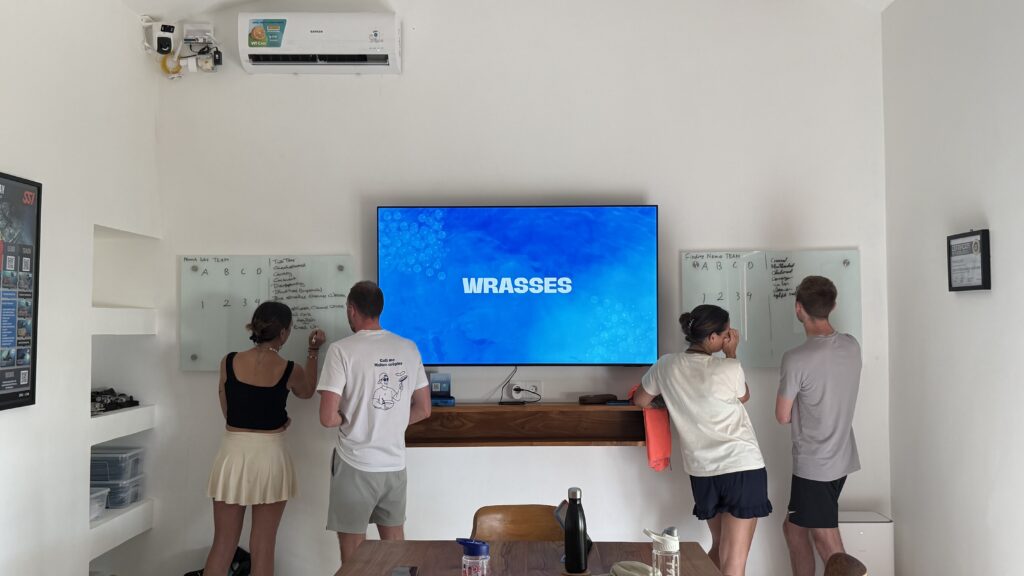
As part of our marine conservation projects in Bali, Project Laut runs REEF.org fish survey training that helps divers build stronger species knowledge and more structured observation skills in the water. Based in Nusa Penida, this part of the program focuses on reef fish identification, survey awareness, and practical methods for recording what divers see on a reef in a more consistent and useful way.
This fish survey training in Bali develops more than simple recognition. It helps participants improve attention to detail, species familiarity, and confidence with reef observation, while also introducing the role that survey-based data collection can play in marine conservation in Bali. For divers who want more than a casual wildlife experience, it adds a strong ecology and monitoring component to their in-water training.
Project Laut is an official REEF.org conservation partner and field station, which gives this work a stronger framework and allows participants to connect their fish identification skills to a wider conservation model. Over time, reef fish survey training becomes not just an educational add-on, but a practical conservation skill that supports marine ecology training in Bali and more informed diving in Nusa Penida.
250+
Fish Species Surveyed
100+
Surveys Completed
Sea Turtle Monitoring and Identification in Bali
Project Laut’s sea turtle monitoring in Bali combines repeated sightings, photo-identification, and long-term logging methods that turn turtle encounters into useful conservation data over time.
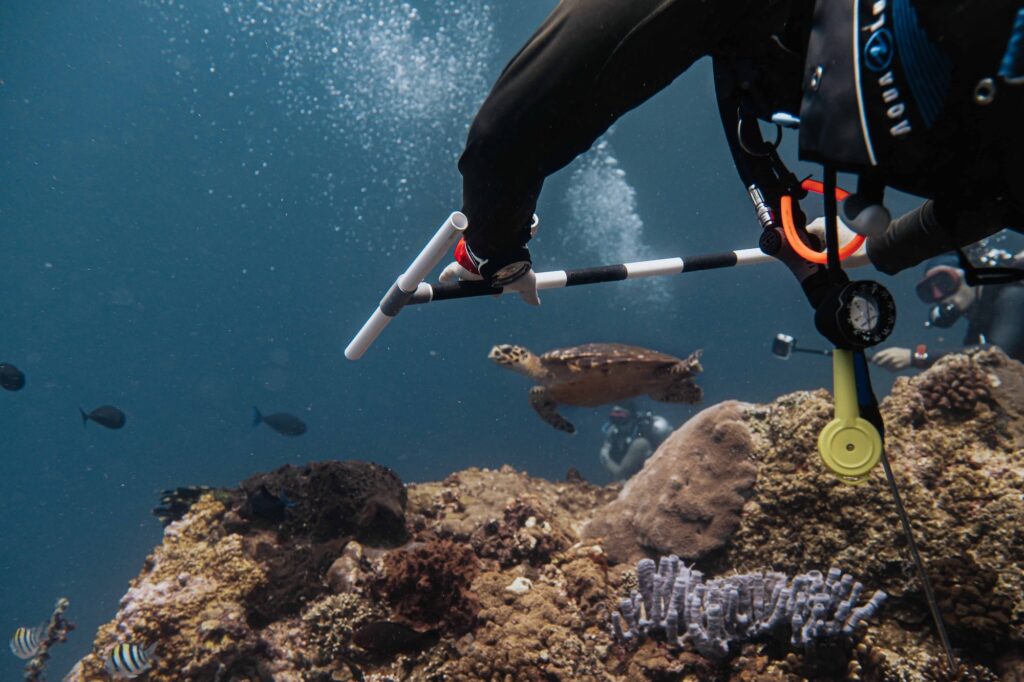
Sea turtle monitoring is one of Project Laut’s active marine conservation projects in Bali. Based in Nusa Penida, this work helps participants learn how individual turtles can be identified, logged, and tracked through repeated observations over time using I3S identification software. Rather than treating sightings as isolated moments, the project introduces a more structured approach to sea turtle conservation in Bali through photo-identification, sighting records, and long-term monitoring value.
Participants learn how turtle identification works in practice, including how to recognize individual animals, record useful sighting information, and understand how repeated encounters contribute to a broader conservation picture. This gives divers a clearer understanding of how sea turtle monitoring in Bali supports real field knowledge while also building observation skills and stronger ecological awareness in the water.
Project Laut also introduces participants to the data side of turtle identification in Nusa Penida, helping connect in-water encounters with a more organized monitoring system. The result is not only a memorable turtle experience, but direct exposure to a practical conservation method that makes sea turtle conservation in Bali more measurable, repeatable, and useful over time.
450+
Individual Turtles Identified
1,800+
Logged Turtle Sightings
Marine Conservation Training in Bali
At Project Laut, marine conservation projects are not treated as a separate add-on to training. Field participation, ecology education, and in-water development are built to reinforce one another, creating a model where learning and conservation work move together.
Fieldwork as Training
Project work is used as a real learning environment, giving divers and trainees direct exposure to methods, repetition, and practical decision-making in the water rather than limiting conservation to theory alone.
Ecology with Real Context
Ecology certifications are linked back to active fieldwork, helping participants understand not just the theory behind marine systems, but how that knowledge applies to restoration, monitoring, and data collection in practice.
A Model Built to Scale Through People
By tying marine conservation projects in Bali to structured training pathways, Project Laut is able to grow both project capacity and participant understanding at the same time, turning education into a meaningful part of long-term field impact.
Conservation Partnerships and Ecology Training Recognition
Project Laut’s marine conservation projects are strengthened not only by field activity, but by external partnerships, formal recognition, and a growing track record of ecology-focused training outcomes.
270+
Ecology Certifications Issued
Project Laut has issued more than 270 marine ecology certifications, reflecting a conservation model that is not only field-based, but actively translated into structured diver education.
#1
Most SSI Ecology Certifications in Indonesia
Project Laut received the award for the most SSI Ecology Certifications in Indonesia in both 2024 and 2025, reinforcing the depth and consistency of our model.
Official
Conservation Partnerships
Project Laut’s work is supported through active project relationships and conservation partnerships, including GoOcean for reef restoration and REEF.org as an official conservation partner and field station.


Ready to train with Project Laut?
Explore the program that fits your goals, or get in touch to talk through your options.