How to Choose the Best Divemaster Course in Bali: What Actually Matters
If you are searching for the best Divemaster course in Bali, it is easy to get pulled toward the wrong things first. Many people compare programs based on price, how quickly they can finish, or whether an internship looks cheap or even “free.” That is rarely what determines whether you leave as a capable dive professional. The best Divemaster course in Bali is not the one that looks easiest on paper. It is the one that gives you strong teaching, clear structure, real mentoring, and enough time in the water to build genuine competence. This guide will help you look past the marketing and focus on what actually matters when choosing a Divemaster course in Bali.
Table of Contents
Most People Choose a Divemaster Course in Bali the Wrong Way
A lot of candidates start by asking the wrong questions. They ask how cheap the program is, how fast they can finish, or whether they can do a “free” Divemaster internship in Bali. Those questions are understandable, but they do not get to the heart of what makes a program good. A Divemaster course is professional training. It should develop your diving, your judgment, your communication, and your ability to take responsibility for other people in the water. If your goal is to become a real dive professional, the quality of the teaching matters far more than the headline price or the promise of a fast certification.
Why price, speed, and “free internships” can be misleading
Cheap does not always mean good value, and fast does not always mean good training. Some Divemaster courses in Bali are marketed around low cost, short timelines, or “free internship” models, but those selling points can hide weak teaching, poor structure, or an overreliance on trainees to support daily operations. In some cases, candidates spend months doing routine work without receiving the focused coaching they expected. In others, they are rushed through the minimum requirements without building the deeper understanding and confidence a professional should have. When comparing a Divemaster internship in Bali, it is important to ask what you are actually getting in return for your time, money, and effort.
Why a Divemaster course should feel like professional training, not a holiday add-on
A good Divemaster course should challenge you. It should push you to improve your skills, sharpen your awareness, and become more professional in the way you think and act. It is not just about logging dives in warm water or spending a season on an island. It is about learning to brief properly, guide responsibly, rescue effectively, manage stress, and make sound decisions under changing conditions. That kind of growth usually involves correction, repetition, discomfort, and honest feedback. If a program feels too easy, too casual, or too eager to hand over the certification, that is usually not a good sign.
What this guide will help you do
This guide is here to help you choose a Divemaster course in Bali with clearer eyes. It will break down the difference between a course and an internship, explain what a strong program should actually include, and show you how to spot red flags before you commit. It will also help you think about the kind of diver you want to become, the kind of environment you want to train in, and the questions you should ask any dive center before booking. The goal is simple: to help you avoid weak programs, understand your options, and choose training that will genuinely prepare you for professional diving.
First Define Your Goal Before You Compare Courses
Before you compare dive centers, timelines, or agencies, you need to be honest about what you actually want from the experience. This is one of the biggest mistakes people make when looking for a Divemaster course in Bali. They compare packages before they define their goal. The result is that they often choose a program that sounds attractive on the surface, but does not really match the kind of diver or professional they want to become. The best way to choose a Divemaster course is to start with your end goal, then work backward from there.
If your goal is to work in diving
If you want to work in diving, you should be looking for more than a certification. You need a program that builds real professional habits. That means strong water skills, good situational awareness, reliable rescue ability, confident briefings, and the ability to guide responsibly under pressure. A good Divemaster course in Bali should help you become the kind of person a dive center can trust, not just someone who has met the minimum requirements on paper.
If your goal is to become an instructor later
If Divemaster is a step toward becoming an instructor, then your choice matters even more. You are not just choosing where to do one course. You are choosing the environment, standards, and mentoring style that may shape your entire professional path and where you will likely do your Dive Instructor Course in Bali. In that case, it makes sense to look closely at the quality of the teaching team, the structure of the professional progression, and whether the dive center is the kind of place you would actually want to continue learning with after Divemaster.
If your goal is simply to become a better diver
This is where many people need to pause and think carefully. Wanting to become a better diver is a good goal, but Divemaster is not always the best first answer. If your main goal is to improve your buoyancy, feel more comfortable underwater, gain experience, and build confidence, you may benefit more from a strong Rescue course, guided dives with coaching, or a few targeted specialties before jumping into professional training. A Divemaster course is designed to prepare you for responsibility, leadership, and assisting others. It is not just a higher recreational course.
If your goal is a longer, more immersive experience
Some people are not looking for the fastest path. They want time in the water, time around dive operations, and time to settle into a training rhythm. That can be a very good reason to choose a longer program, but only if that extra time is being used well. A longer Divemaster internship in Bali can be valuable when it includes structured progression, proper mentoring, repeated skill work, and real development over time. If it is mostly long hours, vague learning, and helping the dive center fill operational gaps, then the length is not a benefit. It is just inefficiency dressed up as experience.
If your goal is to combine Divemaster training with conservation
For some candidates, the ideal program is not just about becoming a dive professional. It is also about learning more about reefs, marine life, field work, and conservation in practice. That can be a strong reason to choose a more specialized Conservation Divemaster course in Bali, especially if you want your training to include a wider understanding of the environment you work in. But conservation should not be accepted at face value just because it sounds good in the marketing.
How to tell whether a conservation program is real or just marketing
A real conservation-focused program should be able to explain what it actually does, why it does it, and what outcomes it is working toward. It should go beyond vague statements about “saving the ocean” and show some substance. That could mean measurable project goals, credible methods, long-term monitoring, local relevance, or partnerships that give the work more depth. If a center talks a lot about conservation but cannot clearly explain the value of the work or how candidates are meaningfully involved, that is a sign to look more carefully. Look for partnerships and standardized operating procedures, such as the REEF.org Fish Survey Methodology.
What a Good Divemaster Course in Bali Should Actually Include
A good Divemaster course in Bali should do far more than help you complete the minimum requirements. It should build the knowledge, skills, and professionalism needed to function as a reliable dive leader. That means active teaching, repeated practice, honest feedback, and clear progression over time. A weak program may give you dives, shadowing, and a certification at the end, but a strong program will leave you more competent, more confident, and far more aware of the responsibility that comes with professional-level diving.
Strong academics, not just self-study and online quizzes
A good program should take the academic side seriously. At Divemaster level, dive theory should not be treated as something you read on your own and then forget once the test is done. A strong training team should actively teach the material, talk through it with you, and help you understand how it applies in real diving situations. That includes topics like decompression theory, gas planning, oxygen exposure, risk management, problem prevention, and the logic behind safe decision-making. If a Divemaster course in Bali relies almost entirely on e-learning and leaves the rest to self-study, that is a weak sign from the start.
Why theory matters more at professional level
At recreational level, it is possible for some divers to get by with only a surface understanding of the theory. At professional level, that is not enough. A Divemaster needs to understand what is happening, why it matters, and how it affects planning, supervision, and response. When things go wrong underwater, strong theory is often what supports calm and correct action.
What should be taught beyond the digital materials
Digital materials can be useful, especially for arrival prep, but they should not be the whole course. A good instructor should expand on the material, question your understanding, connect it to real-world diving, and help you think like a professional rather than a passive student. The best courses teach beyond the minimum standards; they take the material, expand on it, and over it in depth.
Professional-level water skills
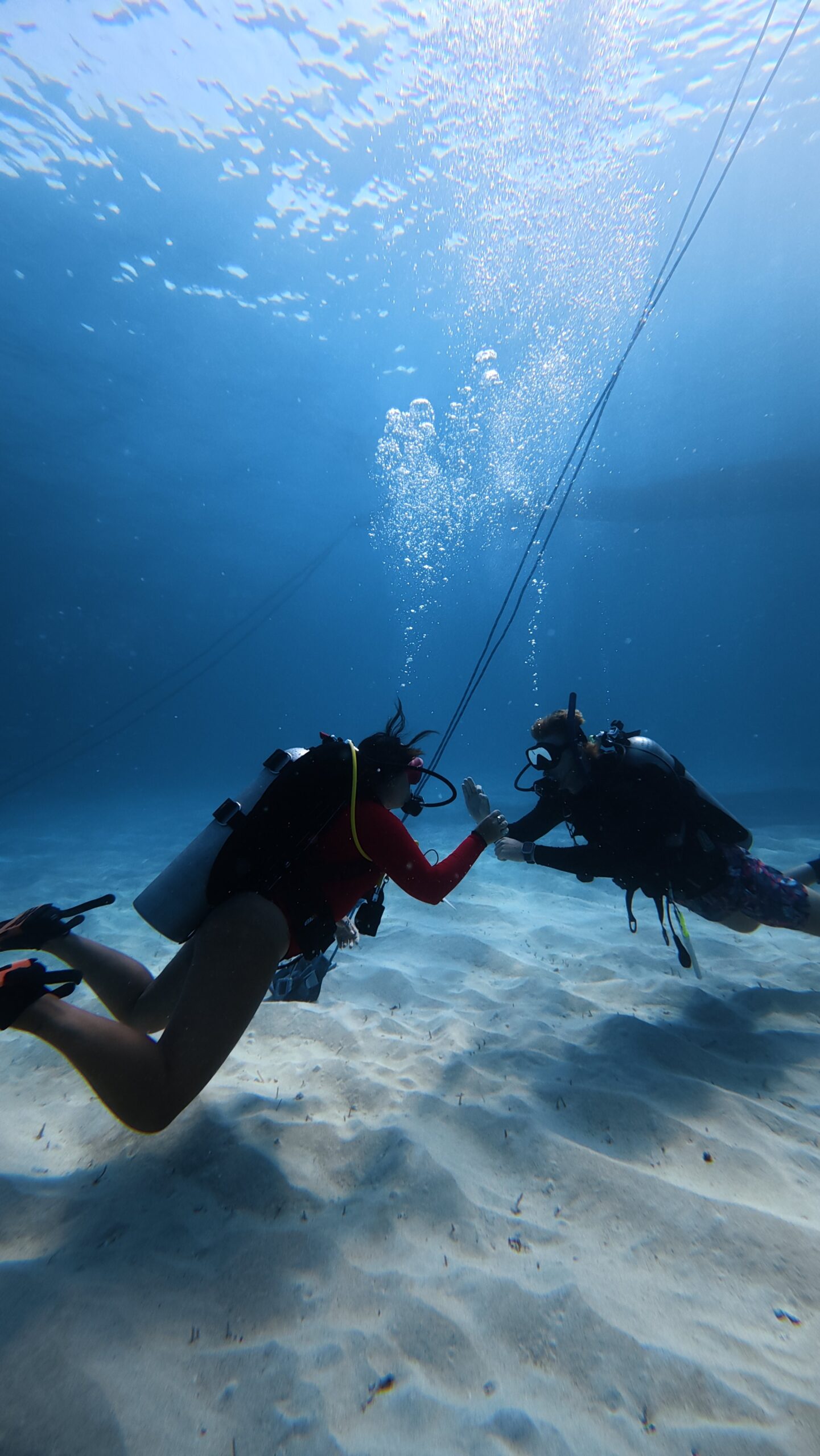
A strong Divemaster course should place major emphasis on in-water skill quality. This is one of the clearest differences between real training and box-ticking. A Divemaster should be able to demonstrate core scuba skills cleanly, calmly, and at expert level. That means minimal corrections, good body control, clear sequencing, and comfort throughout the skill. Many, many weak programs overlook this, and the result is certified Divemasters who struggle to perform basic skills properly on demand. You would be astonished how many certified divemasters arrive to our Instructor Training Center in Nusa Penida to begin training and cannot perform basic skills such as: Scuba Unit Removal & Replace, or Breathing From a Free-flowing Regulator!
Why expert-quality skill demonstrations matter
Divemasters are not just divers who go underwater a lot. They may assist with training, demonstrate skills, supervise certified divers, and help problem-solve in the water. If they cannot perform the basics well themselves, that undermines both safety and credibility.
The difference between passing a skill and performing it properly
Passing a skill once is not the same as owning it. A good program will not be satisfied with “good enough” if the candidate is still unstable, rushed, or inconsistent. The point is not just to get through the list. The point is to reach a professional standard. The very best courses will make sure your skills are mastered and automatic. At Project Laut, we love to combine several skills simultaneously under supervision, such as Mask Removal and Neutral Buoyancy Diving Position for added complexity and fun!
Rescue readiness and in-water confidence
A Divemaster should be comfortable taking action when something goes wrong. That means rescue skills need to be practiced until they feel natural, not just reviewed once and signed off. A strong program should build confidence in responding to tired divers, stressed divers, panicked situations, missing diver scenarios, and in-water management under pressure. Rescue readiness is not just about technique. It is also about calmness, communication, and being able to act decisively when needed.
Buoyancy, trim, positioning, and finning control
A good dive professional should look controlled in the water. That includes strong buoyancy, stable trim, thoughtful positioning, and efficient finning. These skills affect everything from guiding and supervision to air consumption, task loading, environmental awareness, and the ability to assist others without creating more problems. If a program does not spend real time refining these areas, it is leaving out a major part of what makes a strong Divemaster.
Dive briefings, debriefings, and communication skills
One of the most overlooked parts of a Divemaster course is communication. A strong candidate should learn how to brief clearly, debrief honestly, and adapt their communication style to different divers and different situations. Good briefings are not just a memorized speech. They are a tool for setting expectations, creating confidence, reducing confusion, and improving safety. Debriefings matter just as much. This is often where the real learning happens, especially when a dive did not go to plan. What we see in many trained dive professionals is a significant lack of proper communication skills, often skipping debriefings after challenging dives and missing a valuable opportunity to experience discomfort and growth.
Real guiding progression under direct supervision
A good Divemaster course in Bali should include guiding development, but it should happen in stages. Candidates should not be thrown into guiding too early just because a dive center needs support. They should first build awareness, communication, site familiarity, control in the water, and the ability to read divers properly. Real guiding experience is valuable, but only when it is introduced at the right time and under proper supervision.
Feedback, repetition, and structured evaluation
Strong dive professionals are built through repetition and correction. A good Divemaster program should not just show you something once and move on. It should ask you to repeat, improve, and perform under increasing levels of responsibility. That means regular feedback, honest evaluation, and a clear sense of what still needs work. This is where structured progression matters. Students improve faster when they know what the standard is, where they currently fall short, and what they need to do next.
Why shadowing is not enough
Shadowing can be useful, but it is not the same as being trained. Watching operations without structured teaching often creates familiarity, but not depth. A candidate may learn how a dive day looks from the outside without truly understanding the decisions, standards, or reasoning behind it. A good program uses shadowing as one small part of a larger training process, not as a substitute for active instruction.
Divemaster Course vs Internship: What Is the Actual Difference?
This is one of the most misunderstood parts of choosing a Divemaster program in Bali. Many people use the words course and internship as if they mean the same thing, but they do not.
A Divemaster course is the professional training course itself: the standards, performance requirements, academic content, water skills, rescue work, and evaluations needed to become certified. A Divemaster internship in Bali is something built around that course by the dive center offering it. Sometimes that extra structure adds real value. Sometimes it does not. The important question is not what the program is called. The important question is whether the extra time is being used for proper development or simply to support daily operations.
Because many Bali dive centers use these terms interchangeably, we have written a separate guide on Divemaster internship vs Divemaster course in Bali that breaks down what the labels usually mean in practice.
What a Divemaster course is
A Divemaster course is the actual professional program laid out by the training agency, be it SSI, PADI, RADI, or CMAS for example. It includes the minimum standards, prerequisites, skills, academic components, and performance requirements needed to complete the certification. On paper, those requirements can look quite short, especially if a candidate already has the prerequisites and enough logged dives. That is why some people are surprised when they see how quickly certain dive centers say they can complete a Divemaster course in Bali.
The problem is that minimum requirements and strong professional formation are not the same thing. A course can technically be completed without giving the candidate the level of polish, confidence, and judgment that most people imagine a Divemaster should have. That is where the quality of the dive center matters.
What a Divemaster internship is
A Divemaster internship is usually a larger training package built by the dive center around the core course. In theory, this can be a very good thing. A strong Divemaster internship in Bali can take the basic course framework and expand it into a much more complete development process. That may include more guided practice, more time assisting, more mentoring, more repetition, and a more gradual progression into real responsibility.
That is the ideal version. In practice, the word internship can cover a huge range of quality. Some programs are essentially well-structured apprenticeships. Others are little more than low-cost labor arrangements wrapped in attractive marketing. That is why candidates need to look past the label and look closely at the structure.
The problem with the word “internship” in the dive industry
The word internship sounds good. It suggests experience, immersion, and learning by doing. That is exactly why it is used so often in marketing for Divemaster training in Bali. But the term itself does not tell you much. It does not tell you how much teaching you will receive, how much one-on-one feedback you will get, how structured the progression is, or whether the dive center is investing in your development at all.
This is where many people get caught. They see a Divemaster internship in Bali and assume it must be better than a standard course because it is longer, more immersive, or framed as “real-world experience.” Sometimes that is true. Sometimes it just means you will spend more time around the operation without getting much better teaching.
The “free internship” model
“Free” is one of the most attractive and most misleading words in this part of the dive industry. A free Divemaster internship in Bali can sound like a great deal at first, especially to younger divers or long-term travelers trying to keep costs down. But free rarely means free. In many cases, you are paying with your time, your labor, your flexibility, and the opportunity cost of spending months in a program that may not train you very well.
A free internship often works because the dive center benefits from having someone at the bottom of the ladder handling the less attractive parts of the operation. That can mean carrying gear, helping with day-to-day tasks, being heavily used around guests, or being put into routine roles early while the deeper teaching side stays minimal. The candidate may still come out with a certification, but not always with the level of competence they expected.
When free really means you are paying with your time and labor
If you are committing three to six months of your life, working hard, and receiving only limited structured teaching in return, that is not really free. It is simply a different payment model. For some people, that may still be acceptable if the training quality is strong and the expectations are clear from the start. But if the program is vague, heavily labor-based, and light on mentoring, then the candidate is often giving up far more than they realize.
Common warning signs
A free or very cheap Divemaster internship in Bali deserves extra scrutiny if the structure is unclear, the timeline is long but vague, the teaching is mostly described as “shadowing,” or the candidate is expected to start helping with guests before they have a strong understanding of theory, standards, and in-water responsibility. Another bad sign is when the center talks far more about the lifestyle and social atmosphere than about how the training actually works.
The apprenticeship-style internship model
Not all internships are weak. In fact, the best Divemaster internship in Bali may look much more like an apprenticeship than a shortcut. In a good apprenticeship-style program, the dive center is not just giving you time around the operation. It is actively using that time to build you in stages. You learn the theory properly. You practice your skill demonstrations repeatedly. You improve your buoyancy, rescue readiness, briefings, debriefings, and group awareness. Then, once you are ready, you begin taking on real tasks under close supervision.
This kind of internship can be extremely valuable because it expands the core Divemaster course into a real curriculum. Instead of simply checking off boxes, it gives the candidate room to absorb feedback, build confidence gradually, and develop professional judgment over time.
When a longer program genuinely adds value
A longer program adds value when the extra time is being used with purpose. That could mean more structured academics, more confined water repetition, more direct coaching, more guided progression into assisting and guiding, and more room for mistakes to be corrected properly. Length only helps when it is connected to a real training plan.
What structured progression should look like
A strong Divemaster internship should feel progressive. You should understand what you are working on, why it matters, what standard is expected, and what comes next. Early on, the focus may be academics, skill quality, rescue practice, and observation. Later, it may move into briefings, debriefings, assisting, site management, and supervised guiding. It should not feel random. It should feel like you are being built step by step into a dive professional.
Are you being trained, or are you being used to support operations?
This is the question that matters most when comparing a Divemaster course and a Divemaster internship in Bali. A good program should make you feel developed, challenged, corrected, and supported. A weak one may make you feel busy, useful, and involved, but not necessarily more competent.
Being around a dive shop is not the same as being trained well. Logging a lot of dives is not the same as progressing properly. Helping with operations is not the same as receiving real mentorship. If you want to choose the best Divemaster course in Bali, you need to look past whether the program sounds exciting or economical and ask a harder question: Will this actually make me into a strong dive professional?
If the answer is unclear, keep looking.
How Long Should a Good Divemaster Course in Bali Take?
This is one of the most common questions people ask when comparing Divemaster programs in Bali, and it is also one of the easiest places for marketing to distort expectations. On paper, a Divemaster course can be completed relatively quickly if the candidate already has the prerequisites, enough dives, and a solid base of experience. In reality, that does not mean a short timeline is the best option for most people. When you are trying to choose the best Divemaster course in Bali, the real question is not just how fast the certification can be processed. It is how long it takes to build genuine competence, confidence, and professional-level consistency.
Can a Divemaster course be completed quickly on paper?
Yes, it can. If someone already has Rescue-level training, current first aid qualifications, enough logged dives, and a decent starting level in the water, the formal SSI Divemaster course requirements or PADI Divemaster course requirements may not look especially long. That is why some centers advertise very short Divemaster course timelines in Bali. Technically, they are not always wrong. A candidate can sometimes complete the listed requirements in a compressed format.
But that is only one part of the picture. A certification timeline and a development timeline are not the same thing. Finishing the checklist quickly does not automatically mean the diver is ready to guide well, assist confidently, brief properly, or handle problems calmly under pressure.
Why minimum requirements are not the same as real readiness
This is where many people get misled. The minimum requirements are there to define what must be completed for certification. They do not guarantee that every candidate who meets them has been trained to a high standard. A person can technically pass through a Divemaster course in Bali and still come out weak in academics, unstable in demonstrations, hesitant in rescue situations, or underdeveloped in communication and leadership.
A good Divemaster program should aim higher than the minimum. It should give you time to repeat skills until they look professional, time to absorb theory until you actually understand it, and time to grow into responsibility instead of being pushed through it. That takes longer than simply meeting the base requirements.
Who a shorter course might suit
There are some cases where a shorter timeline can make sense. For example, someone who has already been working around dive operations informally, already has strong water skills, already understands the theory well, and simply needs a focused professional progression may be able to move through the course more efficiently. The same may be true for someone who is coming in very current, very prepared, and already operating close to Divemaster standard.
That said, this is not the norm. Most candidates overestimate how ready they are at the beginning. They may have enough dives on paper, but still need substantial work on demonstrations, rescue control, trim, group awareness, professionalism, and briefing quality. For most people, a very short Divemaster course in Bali is more likely to compress development than to improve efficiency.
Why most candidates benefit from a longer training timeline
Most people become better Divemasters when they have enough time to improve properly. That does not mean the course needs to drag on forever, but it does mean that real professional growth usually happens over weeks and months, not just a couple of rushed weekends or a very tight four-week window. A longer timeline allows room for repetition, reflection, correction, and gradual progression. It gives the candidate time to make mistakes, learn from them, and come back stronger on the next attempt.
For many students entering from Rescue level, a good benchmark is that a strong Divemaster program should take roughly eight weeks or more if the goal is real competence rather than quick certification. That timeline is not a magic number, but it is often far more realistic than the compressed formats many people are first drawn to.
More time for theory, skills, and confidence
A longer program gives space for the parts of training that are often rushed in weaker courses. It allows more time for proper academic discussions, more time in confined water practicing demonstrations, more rescue repetitions, and more chances to refine buoyancy, trim, positioning, and control. These are the foundations that make a Divemaster look calm and competent later on.
It also gives candidates time to build confidence honestly. Confidence that is earned through repeated practice is very different from confidence that comes from being told you are ready before you actually are.
More time for guiding, professionalism, and judgment
Professionalism also develops over time. Briefing properly, debriefing well, reading diver behavior, anticipating problems, and making good decisions under changing conditions are not skills most people master immediately. They improve through exposure, coaching, and repetition. A longer Divemaster internship in Bali can be very valuable when it gives candidates a structured chance to grow in these areas step by step rather than throwing them into responsibility too early.
This is also where mentorship matters. Some of the most important growth happens in the conversations around the dives, not just during them.
When longer does not automatically mean better
At the same time, longer is not always better. A long program with weak structure can still be a poor Divemaster internship. If the extra time is mostly spent doing routine work, hanging around the dive center, or drifting through loosely defined shadowing, then the length is not helping much. In that case, the student may feel immersed without actually progressing in a serious way.
That is why duration should never be judged on its own. A good Divemaster course in Bali needs enough time, but it also needs direction. The strongest programs combine both. They are long enough to allow real development, but structured enough that the candidate is clearly moving forward.
In practical terms, that is the real answer to the timing question: duration matters, but structure matters more.
PADI vs SSI: Important, but Not the Most Important Factor
A lot of people start their search for the best Divemaster course in Bali by asking whether they should choose SSI or PADI. That is a fair question, especially at professional level, but it is often given more weight than it deserves. The agency does matter; it affects your professional membership, your fees, your training pathway, and in many cases the instructor route you are most likely to follow later. But it is still not the first thing you should be focusing on. If you are trying to choose the right Divemaster course in Bali, the more important questions are who is training you, how they train, and whether the program is actually structured to produce a strong dive professional.
Why agency choice does matter at professional level
At professional level, agency choice carries more weight than it does at recreational level because you are no longer just choosing a course. You are joining a professional system. That affects your ongoing membership, the standards framework you work within, the materials you use, the continuing education options available to you, and usually the route you take if you continue toward instructor level.
For that reason, it is worth doing some homework. A Divemaster course is often the first real point where a diver commits to one pro path over another. That does not mean the choice is irreversible, but it does mean it has practical consequences.
Membership, fees, and long-term pathway
One of the biggest practical differences between agencies is what comes after certification. Professional membership fees, annual costs, digital systems, continuing education expectations, and crossover expenses all matter more once diving becomes part of your work life. If you think you may continue into instructor training, it makes sense to consider the longer-term pathway rather than treating Divemaster as a one-off decision.
Why Divemaster is often the first real commitment to a pro system
At Divemaster level, you are stepping beyond personal recreational development and into professional identity. Even if you are not teaching yet, you are moving into leadership, supervision, and a more formal role in the industry. That is why agency choice starts to feel more significant here than it did during earlier courses.
Why agency is still overemphasized by many candidates
Even though agency matters, it is still one of the most over-discussed parts of choosing a Divemaster course in Bali. Many candidates get fixated on the logo before they have even looked closely at the dive center itself. They compare PADI and SSI as if one agency alone will determine whether they become a strong professional. In reality, two candidates from different agencies can come out at very different levels depending on the quality of the teaching they received.
A well-trained Divemaster from a strong school with serious standards will usually stand out more than a poorly trained Divemaster from a more recognizable logo. That is the part many people miss. Agency matters, but the quality of execution matters more.
What matters more than the agency logo
The first thing to look at is the people. Are the instructors professional, engaged, and experienced in training Divemaster candidates well? Do they have a clear progression? Do they care about skill quality, academics, rescue readiness, communication, and judgment under pressure? Do they actually mentor their trainees, or do they mostly leave them to shadow and figure things out on the fly?
Those questions matter more than the agency logo on the wall. If you are choosing between two Divemaster courses in Bali, a stronger teaching team and a better-structured program should usually outweigh brand preference alone. A good dive center can make a huge difference. A weak one can undermine the value of the course no matter which agency it belongs to.
Why we chose SSI at Project Laut
At Project Laut, we chose SSI because we like the training philosophy and the flexibility within the system. We value the emphasis on comfort through repetition, and we like that the student experience is supported by strong digital learning materials before arrival. That foundation works well for us because it allows candidates to come in better prepared, while still leaving plenty of room for active teaching, discussion, and in-person development during the course itself.
We also appreciate the flexibility to tailor training to the environment and to the needs of the student. That matters at professional level, especially in a place like Nusa Penida where real conditions shape the kind of diver you become. On top of that, SSI has supported the development of more specialized ecology-based training, which aligns well with how we approach conservation and professional development together.
Read our full comparison of PADI vs SSI Divemaster in Bali
If agency choice is one of your main questions, it is worth looking at it in more detail. We have already written a full breakdown of PADI vs SSI Divemaster in Bali, where we compare the two more directly. But in the context of choosing the best Divemaster course in Bali, the big point is simple: agency matters, but instructor quality and program structure matter more.
If your long-term goal is to continue from Divemaster into instructor training, it is worth understanding how the PADI vs SSI instructor course comparison changes at the next professional level.
Which Part of Bali Is Right for Your Training?
Not all Divemaster training environments in Bali are the same, and that matters more than many people realize.
One of the biggest mistakes candidates make is assuming that a Divemaster course in Bali will be broadly similar no matter where they do it. In reality, the conditions, logistics, and day-to-day style of diving can shape the kind of professional you become. If you are trying to choose the best Divemaster course in Bali, you should not just ask which dive center looks best. You should also ask what kind of environment will push you in the right direction. That is especially true if you are considering a Nusa Penida Divemaster program, because the learning environment there can be very different from calmer parts of Bali.
Why Nusa Penida can produce very strong Divemasters
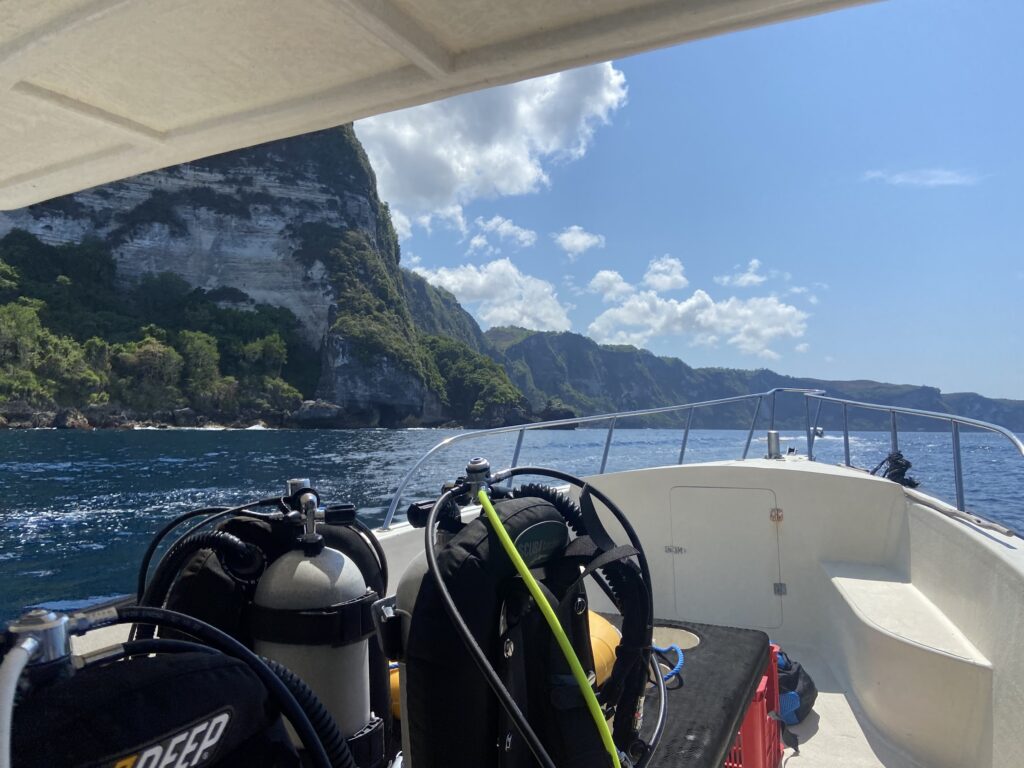
Nusa Penida demanding place to learn, and that is exactly why it can produce very capable dive professionals. The conditions are not always easy. Water temperatures can drop, currents can be strong, sites can change quickly, and groups need to be read carefully. As a Divemaster trainee, that means you are not just learning how to guide a dive when everything goes smoothly. You are learning how to assess the environment honestly, read diver comfort levels, adapt your plan, and sometimes make difficult calls. See a Detailed Overview of Dive Sites in Nusa Penida.
That matters in a big way. A lot of the real work of dive leadership happens in the space between the ideal plan and the actual conditions in front of you. In a place like Nusa Penida, you are exposed to that reality early. You learn that good guiding is not about being rigid. It is about staying aware, staying flexible, and making sound decisions even when there is pressure to keep the dive going.
Currents, colder water, and changing conditions
A Nusa Penida Divemaster program can give you valuable exposure to drift diving, changing visibility, colder thermoclines, surge, current changes, and the wider range of variables that come with boat diving in a dynamic environment. These are not just physical challenges. They are leadership challenges. They force you to think beyond the ideal dive plan and engage with what is actually happening in the moment.
That kind of exposure is valuable because it helps candidates build a more realistic sense of the ocean. It also pushes them to become more observant and more disciplined, both of which are essential if they want to become strong dive leaders later on.
Decision-making, flexibility, and real leadership pressure
One of the hardest parts of guiding is not the route itself. It is managing the space where environmental conditions, diver psychology, and social pressure all meet. There may be moments when a dive feels borderline, when a diver looks uneasy, or when the conditions are simply not right for the group in front of you. Those are the moments that shape real professionalism.
This is one of the strongest arguments in favor of doing a Divemaster course in a place like Nusa Penida. It teaches candidates that leadership is not just about being confident when things are easy. It is about being calm, observant, and willing to make the right decision when the answer is uncomfortable.
Who Nusa Penida is best suited for
Nusa Penida is best suited for divers who want to be challenged and who are willing to grow through that challenge. It is a strong fit for candidates who want more than just warm water and easy diving. If your goal is to become a highly capable, adaptable dive professional, a Nusa Penida Divemaster environment can be an excellent training ground.
It is also a strong fit for people who are excited by the marine environment itself. The reefs are beautiful, biodiversity is high, and the area offers the kind of diving that draws people from around the world. Manta rays, mola mola in season, and occasional larger pelagic sightings all add to the appeal. But the real value for training is not just what you might see. It is what the conditions demand from you as a future professional.
Why Nusa Penida Is Ecologically Significant
Nusa Penida is not just a challenging place to train. It is also one of the most ecologically interesting marine environments in Bali. The Nusa Penida Marine Protected Area covers 20,057 hectares around Nusa Penida, Nusa Lembongan, and Nusa Ceningan, and includes coral reefs, mangroves, and seagrass habitats that support very high marine biodiversity. The area has been reported to hold nearly 300 coral species and more than 500 species of reef fish, alongside well-known megafauna such as manta rays. For divers interested in marine ecology, conservation, and reef systems, that makes Nusa Penida a particularly rewarding place to train and spend time in the water.
For students who want their Divemaster course in Bali to include more than just dive operations, this matters. Training in a place with healthy reefs, varied habitats, and strong conservation relevance gives more context to the marine environment you are working in. It also makes Nusa Penida a compelling setting for ecology-based learning, reef monitoring, and conservation-focused field experience alongside professional dive development.
Who may be better suited to calmer areas
Not every candidate needs or wants a challenging type of learning environment straight away. Some divers benefit from a calmer starting point where they can build confidence in more controlled conditions before stepping into a more demanding setting. If someone is very nervous in current, easily overwhelmed, or mainly looking for easy site repetition and lower-pressure development, then Nusa Penida may not be the ideal first choice.
That does not mean Penida is only for elite divers. It means the environment tends to reward candidates who are open to being challenged and who do not expect the training to feel easy all the time. If a person is looking for a lighter, more sheltered experience, there are other parts of Bali that may fit them better.
Amed and Tulamben: a different style of learning
Amed and Tulamben offer a different type of training environment, and for some candidates that can be a better fit. These areas can allow for more controlled repetition, easier access to certain types of skill work, and a gentler progression into professional-level development. That can be particularly useful for students who need more time to settle into their in-water control, demonstrations, and confidence before dealing with more demanding drift or boat-diving conditions.
That said, calmer does not mean effortless. Shore diving has its own challenges, and surface conditions, entries, and exits can still require solid judgment. The main difference is that the overall training environment often feels more predictable, which can help some candidates focus more directly on their foundational skill development.
Why calmer repetition can help some students
Some students improve fastest when they can repeat skills and scenarios in a more stable environment. That can help them focus on body position, control, rescue technique, and communication without having to process as many moving variables at the same time. For the right person, that kind of repetition can be extremely valuable.
Why easier does not always mean better
At the same time, easier conditions do not automatically create better Divemasters. If the environment removes too much pressure for too long, candidates may not develop the flexibility, awareness, and decision-making that become important later in real guiding situations. That is why the best location is not simply the easiest one. It is the one that matches the kind of diver and professional you are trying to become.
Why the best location depends on the type of diver you want to become
The best Divemaster course in Bali is not tied to one location alone. It depends on your goals, your starting point, and the kind of environment that will help you grow properly. If you want challenge, boat-diving experience, drift exposure, and a sharper test of judgment under changing conditions, a Nusa Penida Divemaster path can be an outstanding option. If you need calmer repetition and a gentler progression, another part of Bali may suit you better.
The key is to choose intentionally. Do not just choose the location with the nicest photos or the easiest reputation. Choose the one that aligns with the kind of training you need and the kind of dive professional you want to become.
What Questions Should You Ask a Divemaster Center Before Booking?
If you are serious about choosing the best Divemaster course in Bali, you need to ask better questions before you commit. Most candidates ask about price, dates, and what is included, and those things do matter. But they do not tell you much about the actual quality of the training. A good Divemaster course should be able to explain how it develops you, not just what it costs. If a dive center cannot clearly answer basic questions about structure, mentoring, progression, and expectations, that is usually a sign to be cautious. Learning how to choose a Divemaster course starts with learning what to ask.
Do you have a structured progression, or are you making it up as you go?
This is one of the most important questions you can ask.
A strong Divemaster course in Bali should have a clear progression from start to finish. That does not mean every day needs to be rigidly identical, but it should mean the center knows how candidates are developed over time. There should be a plan for academics, skill work, rescue readiness, dive briefings, guiding progression, and supervised real-world practice.
If the answer is vague, overly casual, or sounds like the training just depends on what is happening around the shop that week, that is not a good sign. You want a course that feels intentional, not improvised.
Who will actually mentor me day to day?
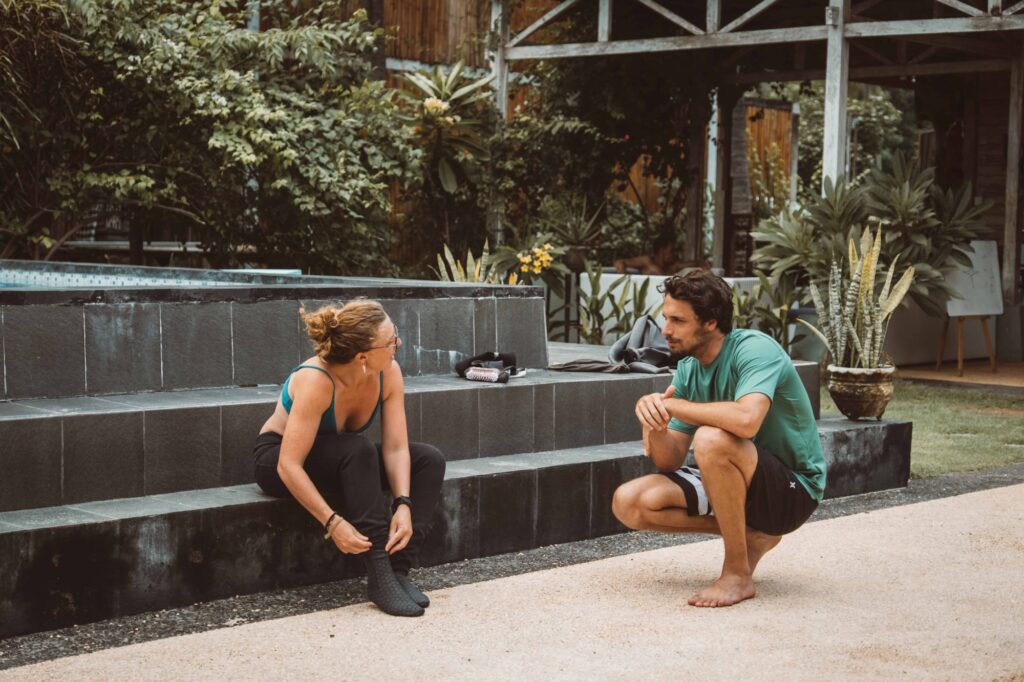
Many programs sound good in broad terms, but the real question is who will actually be responsible for your development. Will you be trained directly by a senior instructor? Will multiple staff members be involved? Will anyone be regularly checking your progress and giving you feedback, or will you mostly be left to shadow and absorb things indirectly?
This matters a lot. A Divemaster course is not just a product. It is a relationship-based learning process. If you are trying to choose the right Divemaster course in Bali, one of the smartest things you can do is look closely at the person or team who will actually be shaping your training.
How much one-on-one support will I get?
Group size affects quality more than many people expect. In a smaller program, instructors can usually give more specific feedback, notice weak points faster, and adjust the training more effectively to the individual. In a larger or higher-volume setup, it becomes easier for people to slip through without enough correction or personal attention.
That does not mean every group program is weak. It means you should understand how much individual support you can realistically expect. If a center cannot explain how candidates are supervised and supported, that is worth paying attention to.
How much of the theory is actively taught?
A weak Divemaster course often leans too heavily on e-learning and self-study. That is why it is worth asking how the academic side is actually handled. Do instructors actively teach the theory? Do they run discussions, lectures, or review sessions? Do they test your understanding beyond the digital materials? Do they connect the theory to real diving decisions?
A strong Divemaster course in Bali should not treat theory as something you complete alone before the real course begins. It should treat theory as a core part of professional development.
Will I repeatedly practice demonstrations and rescue skills?
This is another very important filter. Divemaster-level water skills should be practiced until they are stable, clean, and professional. Rescue skills should also be repeated enough that the candidate becomes calm and capable rather than just familiar with the sequence.
If the answer sounds like skills are mostly reviewed once and signed off, that should concern you. A good program understands that professional competence is built through repetition, not just exposure.
When will I start assisting real courses and guiding under supervision?
This question helps reveal how the center thinks about progression. In a good Divemaster internship in Bali, candidates should eventually move into assisting and guided responsibility, but only when they are ready. If a center talks about getting you straight into helping with guests or guiding early on, that may sound exciting, but it can also be a warning sign that operational need is driving the program more than training quality.
The best answer is one that shows staged progression. You should hear that you will first build academics, skill quality, awareness, and rescue confidence, and then gradually move into real assisting and guided tasks under direct supervision.
What exactly is included and excluded in the package?
This is where clarity matters.
A Divemaster course in Bali can look reasonably priced until the hidden extras begin stacking up. Ask for a full breakdown of inclusions and exclusions. That should cover course materials, agency fees, equipment rental if applicable, marine park fees, insurance expectations, accommodation if relevant, transport if relevant, and any other costs that may appear later.
A good center should be comfortable giving you a clear answer. Vague pricing usually creates problems later.
Can I speak directly with past Divemaster candidates?
This is one of the best things you can ask. A good dive center should not be nervous about putting you in touch with past participants. Speaking directly with someone who has completed the program can give you a far better sense of the real experience than polished marketing copy ever will. You can ask what the teaching felt like, how structured the training was, whether the center delivered what it promised, and how prepared they felt at the end.
If a center resists this too strongly, that may tell you something.
Can I meet the instructor before I commit?
If possible, yes. Even a short call can be useful. A Divemaster course is a significant commitment of time, money, and energy, so it makes sense to speak directly with the people who may train you. This gives you a chance to ask questions properly, get a feel for their communication style, and judge whether the fit seems right.
That conversation can tell you a lot. A strong instructor will usually ask you thoughtful questions too, not just try to close the sale.
A very good sign: when the dive center asks you serious questions too
One of the best signs in this whole process is when the dive center takes time to evaluate you as well. A serious program should want to know your goals, your level, your experience, your mindset, and whether the course is actually a good fit for you. That shows the center is thinking about training quality, not just filling places.
This is easy to overlook, but it matters. The best Divemaster course in Bali is rarely the one that says yes to everyone immediately. It is usually the one that takes the process seriously enough to ask who you are, what you want, and whether the program can genuinely help you get there.
Red Flags: How to Spot a Weak Divemaster Program in Bali
One of the fastest ways to choose a better Divemaster course in Bali is to learn how to spot a weak one early. Most poor programs do not openly advertise themselves as poor. They usually look attractive at first. The website may look polished, the photos may look fun, and the price or timeline may seem appealing. The problem is that weak programs often hide behind vague language, lifestyle marketing, and promises that sound good until you ask for detail. If you want to choose the best Divemaster course in Bali, you need to get comfortable looking past the surface and noticing the warning signs.
“Free internship” with no clear structure
A free Divemaster internship in Bali is one of the biggest areas where people get drawn in too quickly. The idea sounds attractive: spend a few months diving, join the team, and earn your certification without paying much upfront. But if the program cannot clearly explain how the training works, who will mentor you, what progression you will follow, and how your development is measured, that is a serious red flag.
The issue is not just whether the internship is free. The issue is whether the dive center has a real incentive to train you well, or whether it mainly benefits from having an extra person helping with the operation. If the structure is vague, assume the training may be vague too.
Very short paid programs with vague promises
A short Divemaster course in Bali is not automatically bad, but it should immediately raise questions. If a center is offering a very fast timeline and cannot clearly explain how they develop candidates to professional standard in that period, be cautious. A quick course can sound efficient, but in many cases it simply means corners are being cut.
This is especially true when the marketing focuses heavily on how fast you can finish without saying much about academics, rescue quality, skill demonstrations, or professional progression. Speed sells well, but speed alone does not create a capable Divemaster.
Too few full-time staff and too much reliance on trainees
One of the clearest warning signs is when a dive center appears to rely heavily on Divemaster trainees to support normal operations. If there are very few dedicated staff members and trainees seem to be carrying a large share of the guest-facing work, that should concern you. A Divemaster internship in Bali should be built around your training, not around plugging staffing gaps.
This can show up in subtle ways. The center may talk a lot about “real experience” and “getting involved from day one,” but if that really means being used early because the shop needs bodies, the learning quality often suffers.
Being put with guests too early
Many candidates feel excited when they hear they will quickly be out with real divers. It can sound like proof that the training is practical and immersive. In reality, being put with guests too early is often a sign that the program is moving too fast or that the center is prioritizing operations over development.
A good Divemaster course in Bali should build toward real responsibility in stages. Candidates should first develop their academics, rescue readiness, awareness, dive briefings, and in-water control. If a center is eager to put trainees into guest-facing roles before those foundations are solid, that is not a positive sign. It usually means the progression is weak.
High volume, low mentoring
High-volume training environments often struggle to deliver the kind of close feedback that Divemaster development really needs. If a center is pushing a lot of candidates through at once, offering many short professional programs, or appearing to treat Divemaster as a numbers game, then it becomes much harder for each candidate to receive serious mentorship.
That does not mean every busy center is weak. It means you should look carefully at whether the program still makes room for one-on-one feedback, structured evaluation, and genuine correction. A Divemaster course should not feel like a conveyor belt.
Lots of lifestyle marketing, very little detail on training standards
This is a big one. If most of the program marketing revolves around tropical lifestyle, island vibes, social life, sunsets, and “living the dream,” while saying very little about how the training is actually delivered, that is a red flag. Lifestyle is part of why people come to Bali, and there is nothing wrong with that. But a serious Divemaster course in Bali should still be able to explain its standards clearly.
A good program should be proud to talk about academics, skill quality, rescue development, progression, mentoring, and professional expectations. If that information is hard to find, it usually means the center knows the lifestyle is easier to sell than the training itself.
Vague inclusions, vague outcomes, and vague supervision
Vagueness is one of the most consistent warning signs across weak training programs. If the inclusions are unclear, the daily structure is unclear, the role of the instructors is unclear, and the expected outcome is unclear, that is usually not an accident. It often means the center wants flexibility for itself more than clarity for the student.
A good Divemaster internship in Bali should be able to answer basic questions directly. What is included? Who trains you? What does the progression look like? When do you begin assisting? How is your performance assessed? What happens if you need more time? If the answers stay fuzzy, the safest assumption is that the program is not as well built as it should be.
In simple terms, weak programs often try to sell the idea of becoming a Divemaster without showing clearly how they will actually get you there. That is exactly why learning to spot red flags matters so much.
Common Mistakes People Make When Choosing a Divemaster Course in Bali
A lot of people end up in the wrong Divemaster course in Bali not because they are careless, but because they are comparing the wrong things. The marketing around Divemaster training can make weak programs look appealing, especially to people who have never been inside the dive industry before. That is why it helps to understand the common mistakes in advance. If you know where candidates usually go wrong, it becomes much easier to choose a Divemaster course in Bali in a way that actually serves your long-term development.
Choosing based on price alone
This is probably the most common mistake. People see a cheaper Divemaster course or a low-cost Divemaster internship in Bali and assume they are getting better value. Sometimes they are not. Lower price can mean less teaching, less one-on-one support, weaker structure, fewer dedicated staff, or more reliance on the trainee to support operations.
That does not mean expensive always means good. It means price should never be looked at in isolation. The better question is what kind of training, mentorship, and development you are actually getting for that price.
Choosing based on how quickly they can finish
A fast timeline is very appealing, especially for travelers trying to fit training into a limited schedule. But when people focus too heavily on how quickly they can become a Divemaster, they often end up treating the course like a certification to collect rather than a role to grow into.
A short Divemaster course in Bali may look efficient on paper, but for most candidates, compressed timelines reduce the space needed for repetition, correction, and real development. If the program is selling speed more strongly than substance, that should make you pause.
Confusing dive count with real development
Another common mistake is assuming that more dives automatically mean better training. Dive count matters, but only up to a point. A candidate can log many dives and still remain weak in communication, rescue readiness, skill quality, or professional judgment if those dives are not paired with focused coaching and progression.
This is one reason some people finish a Divemaster internship in Bali with plenty of water time but still feel underprepared when they move into an instructor course or more serious professional expectations. Repetition helps, but only if it is guided well.
Overvaluing agency and undervaluing mentorship
PADI vs SSI gets a lot of attention, but many candidates give it too much weight too early. They spend a lot of time worrying about the agency and not enough time looking at the instructors, the program structure, and the quality of the actual learning environment.
A strong mentor can shape your confidence, your standards, your professionalism, and the way you approach diving for years to come. That has far more impact than the logo on the materials. If you are trying to choose the best Divemaster course in Bali, mentorship should sit much higher on your priority list than brand preference alone.
Not asking for a real training outline
Too many candidates book a Divemaster course in Bali without ever asking what the progression actually looks like. They know the duration, the rough price, and maybe the location, but they do not know how the course is structured or how they are expected to develop from start to finish.
That is a mistake because structure matters. A good program should be able to explain what happens early on, how skills are built, how academics are taught, when guiding progression begins, and how performance is evaluated. If you do not ask for that, it becomes much easier for weak programs to hide behind general promises.
Treating Divemaster like a certification to buy
This is one of the most important mindset mistakes. Some people arrive at a Divemaster course assuming they are essentially purchasing the certification as long as they show up, pay, and participate. That mindset usually leads to poor results.
Divemaster should feel like professional training. It should be demanding. It should expose weak points. It should require you to improve. If someone is looking for the easiest possible route to the card, they are usually choosing for the wrong reason and often end up disappointed by the deeper responsibilities that come with the role.
Choosing lifestyle first and learning environment second
Bali is attractive for obvious reasons. The diving is beautiful, the lifestyle is appealing, and many people are drawn by the idea of spending an extended period in a tropical destination. There is nothing wrong with that. The mistake happens when someone chooses the environment mainly for the lifestyle and only secondarily for the training.
That is how people end up in programs that are fun on the surface but weak in substance. If your real goal is to become a strong dive professional, the learning environment has to come first. Lifestyle can be a bonus, but it should not be the main filter.
Doing Divemaster when another training path may suit them better
Not everyone who wants more diving experience needs to do Divemaster next. Some people would benefit more from Rescue, a few strong specialties, a lot of guided diving with coaching, or simply more time building skill and confidence before stepping into professional-level training.
This is an easy mistake to make because Divemaster sounds like the obvious next step for ambitious divers. But if your main goal is to improve your own diving rather than take on leadership and responsibility for others, another path may serve you better first. A good dive center should be honest about that.
The candidates who tend to get the most out of a Divemaster course in Bali are usually the ones who arrive with an open mind, a willingness to be corrected, and a real commitment to the process. They understand that the goal is not just to finish. It is to become more capable.
Who Bali Is a Good Fit For, and Who It Is Not
Bali is a fantastic place to learn to dive and to grow within diving, but it is not automatically the right fit for everyone.
That is worth saying clearly, because a lot of marketing around Divemaster training focuses only on the appealing side of Bali and not on whether the environment actually matches the candidate. If you are trying to choose the best Divemaster course in Bali, it helps to think honestly about fit. Bali can offer beautiful diving, a very attractive lifestyle, strong professional opportunities, and access to varied marine environments. But the right choice depends on what kind of diver you are now, what kind of professional you want to become, and what kind of environment helps you grow best.
Who Bali is a great fit for
Bali is a strong fit for divers who want warm-water training, high biodiversity, and an environment that combines professional development with an enjoyable lifestyle. It suits people who are serious about improving, but who also value being in a place where diving is a central part of daily life. For many candidates, that combination is part of what makes a Divemaster course in Bali so attractive.
It is also a very good fit for people who want exposure to different styles of diving in one region. Depending on where you train, Bali can offer drift diving, boat diving, reef diving, deeper diving, site variety, and the kind of marine life that keeps people excited and engaged throughout a long program. For candidates who want career development, skill development, and strong day-to-day immersion in dive culture, Bali can be an excellent choice.
Who Nusa Penida is a particularly strong fit for
A Nusa Penida Divemaster path is especially well suited to candidates who want challenge, variety, and a more demanding learning environment. It suits divers who are willing to be pushed, who want to sharpen their awareness, and who want to learn how to manage real conditions rather than only ideal ones. If your goal is to become a stronger, more adaptable dive professional, Penida can be an outstanding place to train.
It is also a strong fit for people who are deeply motivated by the marine environment itself. The reefs are beautiful, the fish life is rich, and the chance to see manta rays, mola mola in season, and other large marine life makes the diving highly rewarding. But the real strength of a Nusa Penida Divemaster program is not just the wildlife. It is the way the environment forces you to become more observant, more flexible, and more serious about decision-making.
Who may struggle in Bali if they lack discipline or clear goals
Bali’s strengths can also become distractions for the wrong person. It is comfortable, social, and easy to enjoy, which means it can attract people who are more interested in the island lifestyle than in the actual training. That is where problems often start. A candidate who treats Divemaster like a side activity between nights out and social plans usually does not progress as well as someone who arrives with a clear purpose.
This does not mean you need to be intense all the time or remove all enjoyment from the experience. It means that a Divemaster course in Bali rewards people who can stay focused in a destination that offers a lot of temptation to drift. The candidates who do best are usually the ones who enjoy Bali, but do not lose sight of why they came.
When Bali may not be the best choice for your future work environment
Bali is not the best fit for every long-term career plan. If someone already knows they want to work primarily in very different conditions later on, then it may make more sense to train in an environment closer to that reality. This is especially relevant for people aiming to work in colder water, drysuit-heavy operations, or locations with very different procedures, logistics, and risk profiles.
Cold-water and very different operational environments
If your long-term goal is to work in places like Iceland, Canada, California, or other colder-water environments, then a Divemaster course in Bali may not prepare you for every aspect of those operations. You can still become a strong professional in Bali, especially in terms of leadership, awareness, and dive handling, but the standard operating procedures and environmental demands may be very different. In those cases, it is worth thinking carefully about whether you want your formative training to happen in Bali or in conditions closer to where you eventually want to work.
The right answer depends on the person. For many candidates, Bali is a fantastic place to build strong fundamentals. But choosing the best Divemaster course in Bali still means being honest about whether Bali is the right training ground for your specific future path.
How to Choose the Right Divemaster Course in Bali in 5 Steps
By this point, the pattern should be clear. Choosing the best Divemaster course in Bali is not about finding the cheapest option, the fastest timeline, or the most attractive marketing. It is about finding the scuba dive programs in Bali that match your goals and are actually built to develop you properly. If you want a simple way to choose a Divemaster course without getting lost in industry language, this five-step process is the best place to start.
Step 1: Define your actual goal
Start by being honest about what you want from the program. Do you want to work in diving? Do you see Divemaster as the first step toward becoming an instructor? Are you looking for a serious professional pathway, or are you mainly trying to become a stronger diver in warm water? Are you looking for conservation exposure alongside your training?
This matters because the right Divemaster course in Bali depends heavily on the outcome you want. A candidate who wants to become an instructor should evaluate programs differently from someone who mainly wants a longer immersive experience. The clearer you are about your goal, the easier it becomes to filter out programs that do not really fit.
Step 2: Build a shortlist based on track record and fit
Once you know what you are looking for, start narrowing your options. Look for dive centers that appear serious about professional development, not just recreational volume. Read reviews carefully, but do not just look for generic praise. Look for signs of structure, standards, mentoring, and whether past candidates felt genuinely well prepared.
At this stage, fit matters as much as reputation. A center may be good in general, but not right for your goals, your learning style, or the kind of environment you want. This is also the point where location starts to matter more. If you are considering a Nusa Penida Divemaster path, for example, you should be actively deciding whether that more demanding environment suits the kind of diver you want to become.
Step 3: Ask for the structure of the training
This is where many people separate strong programs from weak ones very quickly. Ask each center what the training actually looks like. Not the sales version. The real version. Ask how the academics are taught, how water skills are developed, how rescue readiness is built, when guided responsibility begins, and how progression is assessed over time.
A good Divemaster course in Bali should be able to explain this clearly. It should not feel random, vague, or overly dependent on what happens to be going on around the shop that week. If a center cannot walk you through how they develop candidates step by step, it becomes much harder to trust the quality of the training.
Step 4: Speak to the instructors and past participants
This is one of the most underrated parts of learning how to choose a Divemaster course. If possible, speak directly with the instructor or training team before booking. A short call can tell you a lot about how they communicate, how seriously they take training, and whether the fit feels right. A serious program should be comfortable having that conversation.
It is also worth speaking to past candidates if the center is willing to connect you. That gives you a much more honest sense of what the experience was actually like. You can ask what the mentoring felt like, whether the structure was clear, whether the training lived up to the promises, and how prepared they felt when it was over. That kind of first-hand insight is often far more useful than polished marketing copy.
Step 5: Choose mentor and structure first, then schedule and location
At the final stage, many candidates are left deciding between two or three reasonable options. That is when priorities matter most. If two programs both look credible, the biggest deciding factors should usually be the mentor and the structure. Who is training you? How seriously do they take standards? How clearly have they explained the progression? Do you trust them to challenge you and develop you properly?
After that, practical things like timing, lifestyle fit, and location can help make the final decision. Those things matter, but they should come after training quality, not before it. If you truly want the best Divemaster course in Bali for your own development, choose the people and the program first. The rest should support that decision, not replace it.
In simple terms, the best Divemaster course in Bali is usually not the one that is easiest to book. It is the one that is most likely to make you competent.
Already thinking about the next professional step after Divemaster?
If you are still comparing your options, read our guide on how to choose the best dive instructor course in Bali. It breaks down what to look for before booking, from training quality and group size to hidden fees and red flags.
Final Thoughts: Choose the People, Not Just the Package
If you take one thing away from this guide, it should be this: the best Divemaster course in Bali is not the one with the cheapest price, the fastest finish, or the most attractive marketing. It is the one that gives you the right environment to grow, the right mentor to guide you, and the right structure to build real competence over time. A good program should not just get you certified. It should make you more capable, more professional, and more prepared for the realities of dive leadership.
What the best Divemaster course in Bali really comes down to
In the end, most of the noise falls away.
Agency matters, but not as much as the people training you. Location matters, but only if it matches your goals. Duration matters, but only when the time is used well. What really makes the difference is whether the course is designed to develop you properly. That means strong academics, repeated skill work, honest feedback, professional expectations, and a mentor who is actually invested in your progress.
If you choose based on those factors, you are far more likely to end up in a Divemaster course in Bali that is worth your time and effort.
Why the right program should make you more competent, not just more certified
There is a big difference between finishing a course and becoming ready for professional responsibility. A weak program may still hand over a certification card. A strong one should leave you noticeably sharper in the water, stronger in your judgment, better in your communication, and far more aware of what the role really demands.
That is the standard worth aiming for. If a Divemaster course feels too easy, too vague, or too focused on selling the lifestyle, it is worth asking whether it is really helping you become the kind of dive professional you want to be.
Who Project Laut is a strong fit for
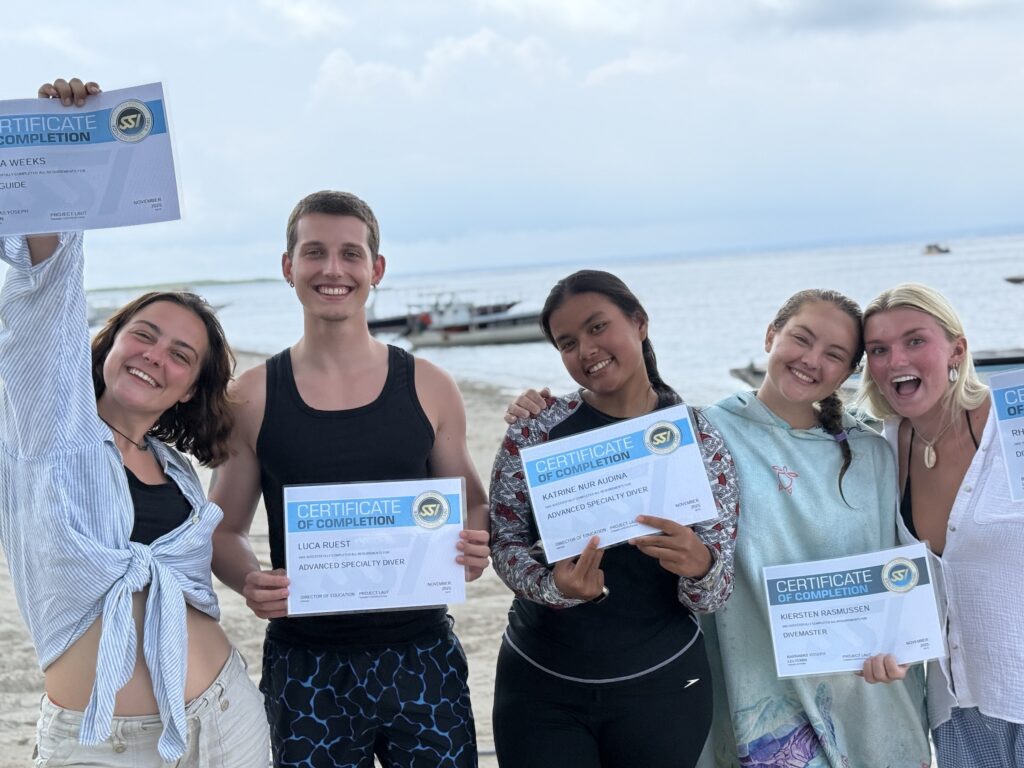
At Project Laut, we believe Divemaster training should be structured, demanding, and genuinely developmental. Our flagship Conservation Divemaster Course in Bali is best suited to candidates who want more than a quick certification. It is for people who want real mentoring, strong professional progression, and a learning environment that combines dive training with meaningful conservation exposure.
Professional dive training with meaningful conservation exposure
For the right student, combining professional training with conservation can add a lot of value. It gives context to the marine environments you work in and helps build a deeper connection to the reefs, species, and field practices that surround your diving. That only works when the conservation side is real, thoughtful, and integrated into the program with purpose.
For students who want challenge, structure, and mentorship
Project Laut is a strong fit for candidates who are open to challenge, willing to be coached, and serious about becoming better. You do not need to arrive as a perfect diver, and you do not need a prior background in biology or conservation. But you do need the right mindset. If you are looking for a Divemaster course in Bali that values teaching quality, clear progression, and real development in the water, that is exactly the kind of training we aim to provide. We are proud that many of our divemaster graduates naturally continue their Dive Instructor Course in Bali with us following their initial program!
Compare Your Options Carefully
The best Divemaster course in Bali is the one that fits your goals, challenges you in the right ways, and gives you the mentoring and structure to improve properly. If you are comparing programs and want to see how Project Laut approaches professional training, you can explore our Conservation Divemaster Course or contact us to talk through your goals.
Frequently Asked Questions About Divemaster Courses in Bali
How long should a Divemaster course in Bali take?
For most candidates, a good Divemaster course in Bali should take at least around eight weeks if the goal is real development, not just fast certification. Some programs can be completed more quickly on paper, especially if the candidate already has strong experience and all prerequisites in place, but that is not the same as being genuinely ready for professional-level responsibility. In most cases, more time allows for better skill development, stronger academics, more rescue practice, and more guided progression into real responsibility.
Is a Divemaster internship better than a course?
It can be, but only if the internship is structured well. A good Divemaster internship in Bali should take the base course and expand it into a real training program with mentoring, repetition, feedback, and gradual progression. A weak internship may simply stretch the timeline without adding much actual learning. The key question is not whether it is called an internship. The key question is whether the extra time is being used for training or for labor.
Is Bali a good place to do your Divemaster?
Yes, Bali can be an excellent place to do your Divemaster. It offers warm-water diving, strong marine biodiversity, varied conditions, and a lifestyle that appeals to many divers. It can also be a very good place to build communication, leadership, and professional confidence. That said, the best part of Bali for your training depends on your goals. Some areas are better for calmer repetition, while others, such as Nusa Penida, are better for challenge and stronger decision-making under real conditions.
Should I choose the SSI or PADI Divemaster course?
You should choose the agency carefully, but you should choose the dive center even more carefully. At professional level, agency does matter because it affects your membership, your pathway, and often the route you are most likely to follow into instructor training. But in practical terms, the quality of the instructors, the structure of the program, and the standards of the dive center will usually have a bigger impact on the kind of Divemaster you become. We have already written a full breakdown of PADI vs SSI Divemaster in Bali, where we compare the two more directly, if you want more detailed information on the topic.
What are the prerequisites for a Divemaster course?
In general, the prerequisites for a Divemaster course include Rescue-level training or equivalent, current first aid and oxygen provider training, and a minimum number of logged dives. The exact requirements can vary depending on the agency and the structure of the program. Some Divemaster internships in Bali are designed to take candidates from a lower certification level and build those prerequisites into the wider training path, while others expect candidates to arrive already ready to begin the Divemaster portion itself.
Can I do a Divemaster in Bali if I do not want to become an instructor?
Yes. Not everyone who does a Divemaster course in Bali plans to continue directly into instructor training. Some candidates do it because they want a deeper level of professional development, stronger leadership skills, more diving experience, or a serious challenge in the water. That said, if your only goal is to become a better recreational diver, Divemaster may not always be the best next step. In some cases, a different training path may suit you better first.
Which part of Bali is best for Divemaster training?
There is no single best answer for everyone. The best location depends on the type of diver you are and the type of professional you want to become. A Nusa Penida Divemaster path can be excellent for candidates who want drift exposure, boat-diving experience, stronger decision-making pressure, and a more demanding learning environment. Other parts of Bali may be a better fit for candidates who want calmer conditions, more controlled repetition, and a gentler progression into professional training.
What should be included in a Divemaster package?
A good Divemaster package should come with a clear and detailed list of inclusions and exclusions. That usually means course materials, training, professional fees, and any major costs that the candidate is expected to cover. If equipment rental, accommodation, transport, or marine park fees are part of the package, that should also be clearly stated. The important thing is not that every package includes exactly the same things. It is that the dive center is transparent, so you know exactly what you are paying for and what additional costs may come later.