Divemaster Internship vs Divemaster Course in Bali: What’s the Real Difference?
If you have been researching professional dive training in Bali, you have probably noticed something quickly: many dive centers use the terms Divemaster internship Bali and Divemaster course Bali almost interchangeably.
That creates confusion straight away. It also leads many people to compare the wrong things.
Part of the issue starts with the word internship itself. Many people read it through a Western office-culture lens and assume it means paid work, unpaid work, or some kind of work-exchange where they help in the shop and “earn” their training. In most cases, that is not what is being offered at all. You are still the customer, and you are still looking at a paid professional training pathway.
That is why the real question is not which label sounds better. The real question is what kind of structure sits behind the label, and whether that structure will actually make you a stronger professional diver.
In simple terms, a Divemaster course is the certification framework. A true internship-style pathway is a broader training structure built around that framework. Sometimes the two overlap heavily. Sometimes they are nearly identical. Sometimes one is clearly stronger than the other. What matters is not the wording on the sales page. What matters is whether the program actually develops your diving, your leadership, your judgment, and your readiness to work at a professional level.
Why so many people get confused by “Divemaster internship Bali” and “Divemaster course Bali”
A lot of the confusion comes directly from the Bali dive industry itself.
Many dive shops and training centers use the words course and internship very loosely. One center may call something a Divemaster course, another may call a very similar product a Divemaster internship, and another may use both terms on the same page.
That creates two separate problems.
The first is on the customer side. Many people see the word internship and immediately assume it means one of three things: it is free, they get paid, or they can somehow work off the cost by helping out around the dive shop. That assumption is understandable, because that is how internships are often framed in other industries. But in professional dive training, especially in Bali, that is usually not the reality. In most cases, the person inquiring is still the customer buying a high-value training product.
The second problem is on the dive center side. Because the word internship sounds more immersive and attractive, it often gets used even when the actual training structure is not especially different from a standard course. So the label ends up doing more marketing work than practical work.
That is why it is better to stop asking, “Is this a Divemaster internship or a Divemaster course?” and start asking better questions: What exactly is included? How is it taught? How much support is there? How much real feedback is there? What kind of diver will I actually become by the end?
If you are still in the broader research stage, this is also where it helps to read a proper buyer’s guide on how to choose the best Divemaster course in Bali.
What a Divemaster course in Bali actually is
At its core, a Divemaster course in Bali is the formal certification structure required to earn the professional rating.
It is the framework of requirements that must be completed in order to become certified. That includes logged dive minimums, prerequisite certifications, theory and academics, practical assessments, leadership-related evaluations, professional swim tests, and current first aid or oxygen provider status.
In practice, depending on the agency and training route, that usually includes things like:
- minimum logged dives
- deep, navigation, and night or limited visibility experience
- a Divemaster final exam
- dive briefing and dive guiding assessments
- open water skills circuits
- rescue scenarios
- swim and stamina tests
- active first aid and oxygen provider status
That is the course.
The important point is that the course itself is only the certification framework. It tells you what must be completed. It does not tell you how seriously those requirements are taught, how much time is spent developing the candidate, or how strong the training standard really is.
This is where many people make a bad assumption. They see that two programs lead to the same certification and assume they must be broadly equal. They are not. Two candidates can finish with the same Divemaster card and come out at completely different levels.
Whether you look at PADI Divemaster prerequisites or SSI’s structure, the key point is the same: the course is a formal framework, not a guarantee of training quality.
If agency choice is part of your thinking, you can also read our comparison on PADI vs SSI Divemaster Course in Bali.
What a Divemaster internship in Bali usually means in practice
A real Divemaster internship in Bali should be more than just the checklist of certification requirements.
It should be a larger training program designed to help you grow into the role properly.
That usually means more time, more repetition, more immersion, and more support. Instead of focusing only on whether you can technically pass each required component, a strong internship-style pathway should also be building the softer but essential parts of becoming a dive professional: leadership, confidence, professionalism, decision-making, situational awareness, group control, and the ability to stay calm and effective when conditions or people become difficult.
This is the cleanest practical distinction:
A Divemaster course is the certification framework. A real internship-style pathway is the broader training structure built around it.
That is what it should mean.
The problem is that not every program marketed as an internship actually delivers that. Some are genuinely immersive, developmental, and well-supported. Others are just standard courses with a more attractive label. A few are worse than that and use the word internship to disguise weak structure or cheap labour.
If you want to see what a more structured, longer-format pathway looks like in practice, our Conservation Divemaster Course in Bali is the clearest example of how we approach it.
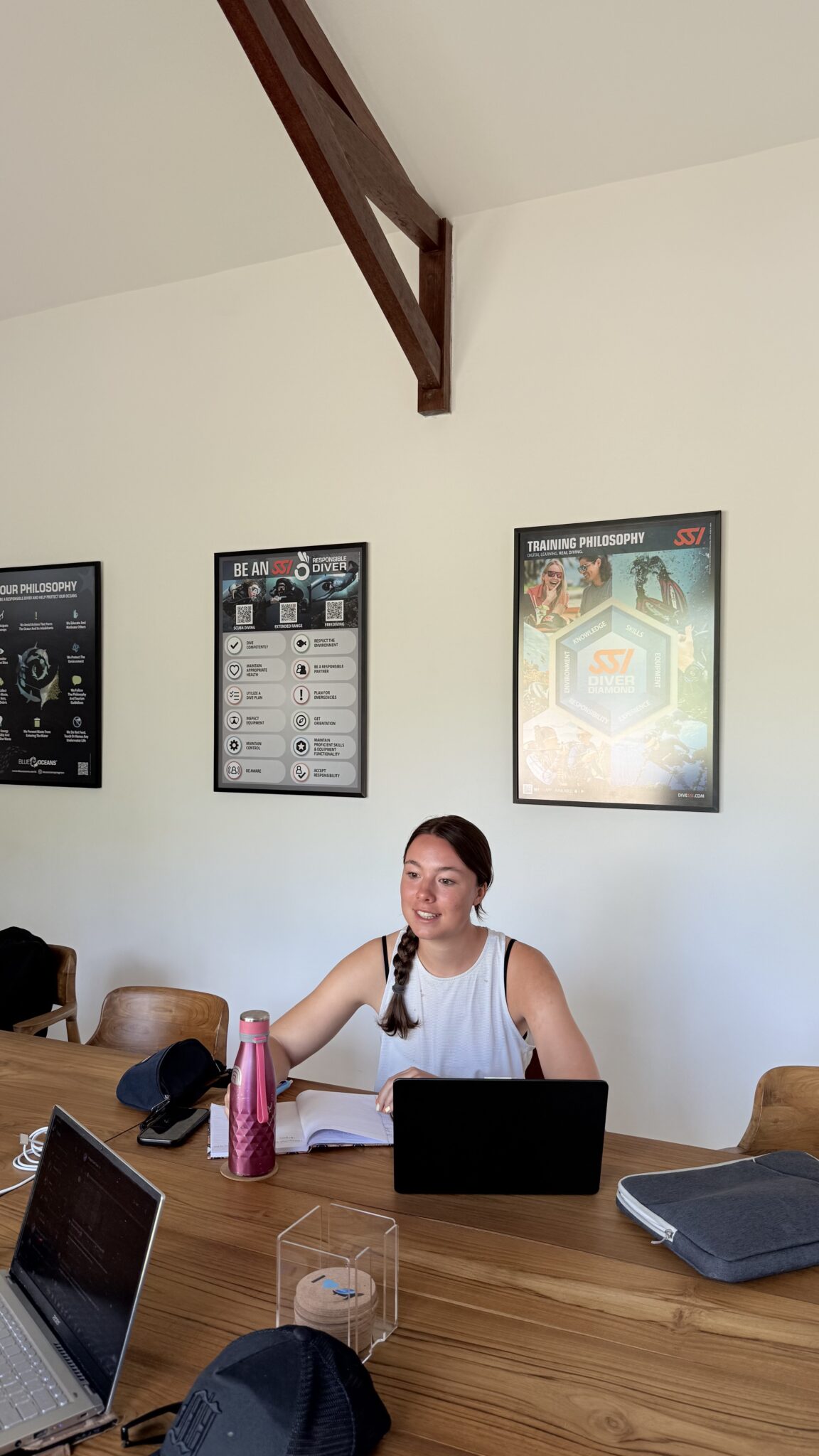
The real difference is not the label. It is the structure.
This is the central point of the whole discussion.
If you want to choose well, stop focusing on the label and start focusing on the structure. Structure is what determines whether you are being processed quickly or genuinely developed.
Mentorship Matters Most
The single most important factor in any Divemaster pathway is mentorship.
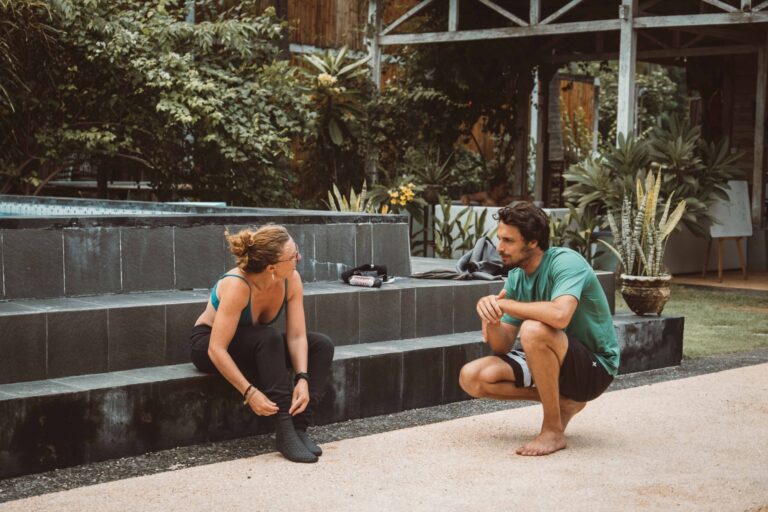
Good mentorship is hard to fake. It is easy to recognise when you see it, and equally easy to feel when it is missing. It looks like an instructor who actually cares about your development, not just your sign-off. Someone who is invested in your improvement. Someone willing to jump into the pool unscheduled because you need more work on a skill. Someone willing to stop, clear a table, and physically demonstrate proper finning technique because they want you to actually understand it. Someone who helps you process difficult dives, tough conditions, and frustrating experiences instead of just logging them and moving on.
That kind of instructor is not just delivering a course. They are building a professional.
The opposite is also easy to spot. If the relationship feels rushed, passive, or purely transactional, you are probably not getting strong mentorship. If the assumption is that you will just “pick it up” by being around, that is not enough for most people.
Good mentorship is the difference between being processed and being developed.
Standards Matter More Than Marketing
The second major factor is training standard.
Some programs treat the standards as the finish line. Better programs treat the standards as the minimum.
That difference is massive.
If a training center is only trying to get you over the line, everything tends to get shaped around speed, convenience, and basic passability. Skills may technically be demonstrated. Theory may technically be covered. Requirements may technically be signed off. But that does not mean the candidate is actually strong.
A better program uses the standards as a floor, not the goal. It expects stronger technique, better control, better understanding, cleaner practical performance, and more mature judgment than the minimum paperwork strictly requires.
That is one of the clearest dividing lines between weak and strong Divemaster training.
The learning environment matters
Even a good instructor team can be undermined by the wrong dive center culture.
One of the most damaging pressures in professional training is top-down pressure to complete courses quickly, increase turnover, reduce training time, or quietly lower standards in order to move people through faster. When owners or managers reward speed more than quality, the learning atmosphere collapses quickly. Staff start cutting corners, the candidate feels rushed, and the whole pathway weakens.
The reverse happens too. A dive center may claim to value quality, but some instructors see standards as annoying, pool work as a hassle, or practical detail as unnecessary. In those cases, corners get cut from the instructor side instead.
A strong instructor team needs a dive center culture that protects training quality rather than rewarding speed and convenience.
Dive count matters less than many people think
Dive numbers do matter. There is a reason Divemaster training includes minimum logged dives, and if you are starting with low experience, then dive count becomes more important.
But many people still overvalue raw numbers.
High-quality diving is more valuable than high-quantity diving.
What matters more is consistency, openness to feedback, willingness to apply that feedback, and respect for deliberate practice. Pool time matters. Technique matters. Repeating a skill until it is genuinely controlled matters. Learning from dives matters. Adjusting after mistakes matters.
A high dive count means very little if the diver has weak habits, poor academics, and no real coaching behind those dives.
When a shorter Divemaster course makes sense
A short-format Divemaster course Bali option is not automatically wrong. It is just only suitable for a narrow type of candidate.
If someone already has substantial experience, strong watermanship, real comfort in varied conditions, and is essentially taking Divemaster to formalise skills they already have, then a shorter course can absolutely make sense. This is especially true for very experienced Rescue divers, divers with hundreds of dives, or people who have already been operating close to that level informally but lack the actual professional certification.
For that kind of candidate, the gap is often not basic in-water comfort. It may be theory, academics, formal evaluation, or polishing certain professional-level requirements. In those cases, a short and focused program can be efficient and appropriate.
That is worth saying clearly, because not every short course is nonsense.
But it only works when the candidate is already genuinely close to the standard.
When an internship-style Divemaster pathway makes more sense
For almost everybody else, the longer internship-style pathway is the better option.
Leadership takes time. Confidence takes time. Judgment takes time. Guiding different types of divers safely takes time. Learning to read a group, adapt to changing conditions, and make decisions under pressure takes time. And that is all before you even consider how much work it takes to meet the Divemaster requirements properly.
Most people underestimate this badly.
It takes a long time to become genuinely comfortable in a leadership role underwater. You may be guiding very new divers who have only done a few dives in their lives, then helping rusty certified divers who have not dived for years, then diving with people more highly certified than you. Being able to lead safely, make the experience enjoyable, and stay calm while doing it is not something most people can honestly compress into two weeks.
That is why a longer pathway makes much more sense for most candidates. It gives room for repetition, failure, feedback, reflection, confidence-building, and actual growth.
The uncomfortable truth is that many very short programs only seem to work because corners get cut. Parts of the course get reduced, the standard gets lowered, or sign-offs happen too easily so the person can “pass.” That may produce a certification card. It does not necessarily produce a strong Divemaster.
If your plan is to use your Divemaster training as a stepping stone toward teaching, you should also compare the PADI vs SSI instructor course before committing to a long-term agency pathway, but the reality is that they are both very similar just with different costs.
Red flags to watch for in a Divemaster internship in Bali
There are some red flags that should make you look much more carefully at what is actually being sold.
The biggest one is the idea of the free internship.
If a dive center is marketing a free internship, you need to look very carefully at what that actually means. In many cases, those programs are not built around your development at all. They are built around the dive shop’s labour needs. You end up doing the least desirable jobs in the operation: hauling tanks, moving equipment, cleaning boats, cleaning gear, running errands, getting lunches, and generally taking pressure off paid staff. “Shadowing” may be included as a vague promise, but the real value to the shop is often that they save money by not hiring enough people.
That is not a strong training pathway. It is a major red flag.
Another red flag is when “shadowing” is used to hide the fact that there is no real Divemaster curriculum, no dedicated training staff, and no proper development structure. Watching experienced people can be useful, but only when it sits inside a progression: first you learn, then you observe with context, then you begin taking the lead under direct supervision. Without that structure, shadowing becomes passive imitation.
A more serious red flag is when centers begin using Divemasters in training to guide actual guests before they are ready, or even before they are certified. That is not meaningful development. That is a staffing problem disguised as training.
Other warning signs include very rushed timelines, vague descriptions of what the training actually includes, little mention of academics, little mention of pool work, huge groups, and lots of marketing language around “experience” with very little explanation of how the training is delivered.
Where many Divemaster programs cut corners
One of the most common places dive centers cut corners is practical skills training.
It is not unusual to meet Divemaster candidates who have had almost no meaningful pool work. They may have spent one or two days in the pool, been signed off, and moved on. Then they arrive at instructor-level training and the weakness becomes obvious. They may struggle with very basic self-rescue or equipment-removal skills. Some have never properly practised breathing from a free-flowing regulator. Some have never genuinely learned emergency buoyant ascent. Some have only ever seen certain skills once, if at all.
That is one of the clearest signs of weak Divemaster preparation: a certified candidate arriving at the next level and being unable to perform or explain the basics.
Academics are another area where the industry often cuts corners badly.
Many candidates come through Divemaster programs with a shockingly weak understanding of core dive theory. They may struggle to explain lung overexpansion injuries, decompression sickness, no-decompression limits, and other basic physiology and physics concepts that should be fundamental at a professional level. Sometimes their knowledge is so thin that it is surprising more accidents do not happen.
That usually reflects a system where candidates are put in the water a lot, complete online learning, do some loose observation, and are then treated as finished without much deeper teaching.
That matters because weak academics and poor practical foundations are not just a training issue. They are a diver safety issue
Watching and diving a lot is not the same thing as being trained well.
What real shadowing should look like
Shadowing itself is not the problem. Weak training disguised as shadowing is the problem.
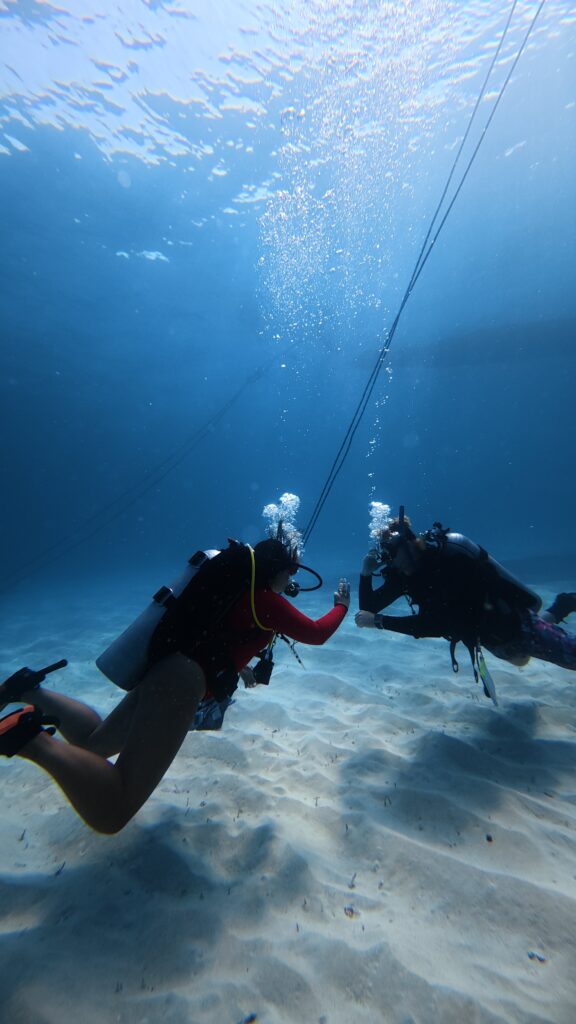
Real shadowing belongs inside a progression. First the candidate learns the principles. Then they are exposed to real-life situations through structured observation. Then, when ready, they begin taking responsibility under direct supervision. That can be very effective because it helps connect training to reality.
Fake shadowing is different. Fake shadowing is what happens when a center has no proper Divemaster training structure, no dedicated training staff, and not enough experienced personnel to handle the diving load cleanly. So they place trainees into vague shadow roles and expect them to absorb skills through loose exposure alone. The candidate follows along, watches, helps here and there, and often believes they are receiving strong training simply because they are near the action. In reality, large gaps are being left untouched.
That is one of the most dangerous parts of poor professional training. People often do not realise how many gaps they still have until they reach the next level, or until they are placed in a real situation they cannot handle confidently.
Watching alone is not the same thing as being trained.
Where Project Laut fits on that spectrum
At Project Laut, the standards are not the target. They are the floor.
That is a major philosophical difference from many average Divemaster pathways in Bali.
We are strict about completing standards properly, but we do not treat that as enough. We use them as the minimum level someone needs to reach, then build beyond them. In practical terms, that means requiring open water skills to be mastered neutrally buoyant rather than allowing candidates to hide on their knees on the bottom. It means formally testing practical applications rather than treating them casually. It means being willing to fail an assessment and identify a weakness honestly, because that weakness is exactly what needs to be improved.
We actively value that part of the process. Failing a practical application is not a problem to be avoided. It is useful information. It shows exactly where the candidate still needs work. Candidates can come back and pass, but only if the gap is recognised honestly first.
The same approach applies academically. We treat digital learning as preparation, not as the full educational experience. We expand beyond it with our own presentations, deeper theory, added explanation, and outside resources such as videos, podcasts, and research material. The goal is not just to get through the content. The goal is to actually understand it.
Another major difference is structure. We have dedicated internship staff and a strong curriculum, which means Divemaster development is the focal point, not just an add-on around a busy dive schedule. There is clear progression, small groups, strong mentorship, and a team that genuinely cares about teaching.
That changes the student experience completely. The difference is not small. It is the difference between loosely following along and being deliberately built.
If you want to see how that looks in practice, you can explore our Conservation Divemaster Course in Bali.
How conservation makes a better dive professional
For us, conservation is not just an extra theme sitting beside the Divemaster pathway. It makes the pathway better.
At a basic level, most divers already have some appreciation of nature. After all, we are all paying to go underwater to look at marine life. But stronger ecological understanding turns that appreciation into something more useful.
A diver who understands the environment well can give a far better experience than a diver who only knows how to get the group in and out of the water. Guests usually want to know what they saw, how the reef functions, why certain species behave the way they do, and what is happening in the ecosystem around them. A dive professional who can interpret the underwater world well adds real value.
Beyond that, conservation can become something much bigger. For some people, it is the bridge into the kind of work they actually want to do. It can help move them toward reef restoration, monitoring, species identification, ecology education, future academic work, or even building their own conservation initiatives. Some interns go on to start their own projects. Others use the experience to strengthen future study or professional goals.
So conservation is not just enrichment. It improves the kind of dive professional someone becomes, and for the right person, it can help open a much wider future.
You can also explore our broader Marine Conservation Courses in Bali if that side of the pathway is part of what you are looking for.
Already thinking about the next professional step after Divemaster?
If you are still comparing your instructor course options, read our guide on how to choose the best dive instructor course in Bali. It breaks down what to look for before booking, from training quality and group size to hidden fees and red flags.
Why Nusa Penida can produce stronger dive professionals
Training location matters more than many people realise.
Nusa Penida can be a strong place to train because the environment asks more of you. There is drift, changing currents, occasional cold water, swell, wind, thermoclines, exposed sites, and conditions that can shift quickly. That means a future professional is forced to engage more actively with dive planning, site choice, group control, and decision-making.
That matters.
A trainee in Nusa Penida may have to think about whether a site should be changed because conditions are borderline. They may have to decide whether a dive should be shortened or aborted early. They may need to assess whether a group is suitable for a certain site based on current, comfort, experience, or behaviour. They may also face pressure from guests who want to chase a specific outcome, like seeing mola mola, even when the safer choice is to stay shallower, turn the dive, or choose another plan entirely.
Those are real professional decisions.
You may also be faced with deteriorating surface conditions, visible washing-machine current, downcurrents, or group dynamics that are beginning to become hard to control. These are the kinds of situations that force you to think and act proactively rather than simply follow a standard plan.
That is why Nusa Penida can build stronger professionals. Not because hard conditions are automatically good in themselves, but because they create real opportunities to learn judgment under the direct supervision of experienced instructors.
The goal is not difficulty for its own sake. The goal is learning how to make good decisions in changing conditions.
Nusa Penida is not only a demanding training environment. It is also part of the Nusa Penida Marine Protected Area, one of Bali’s most important marine environments.
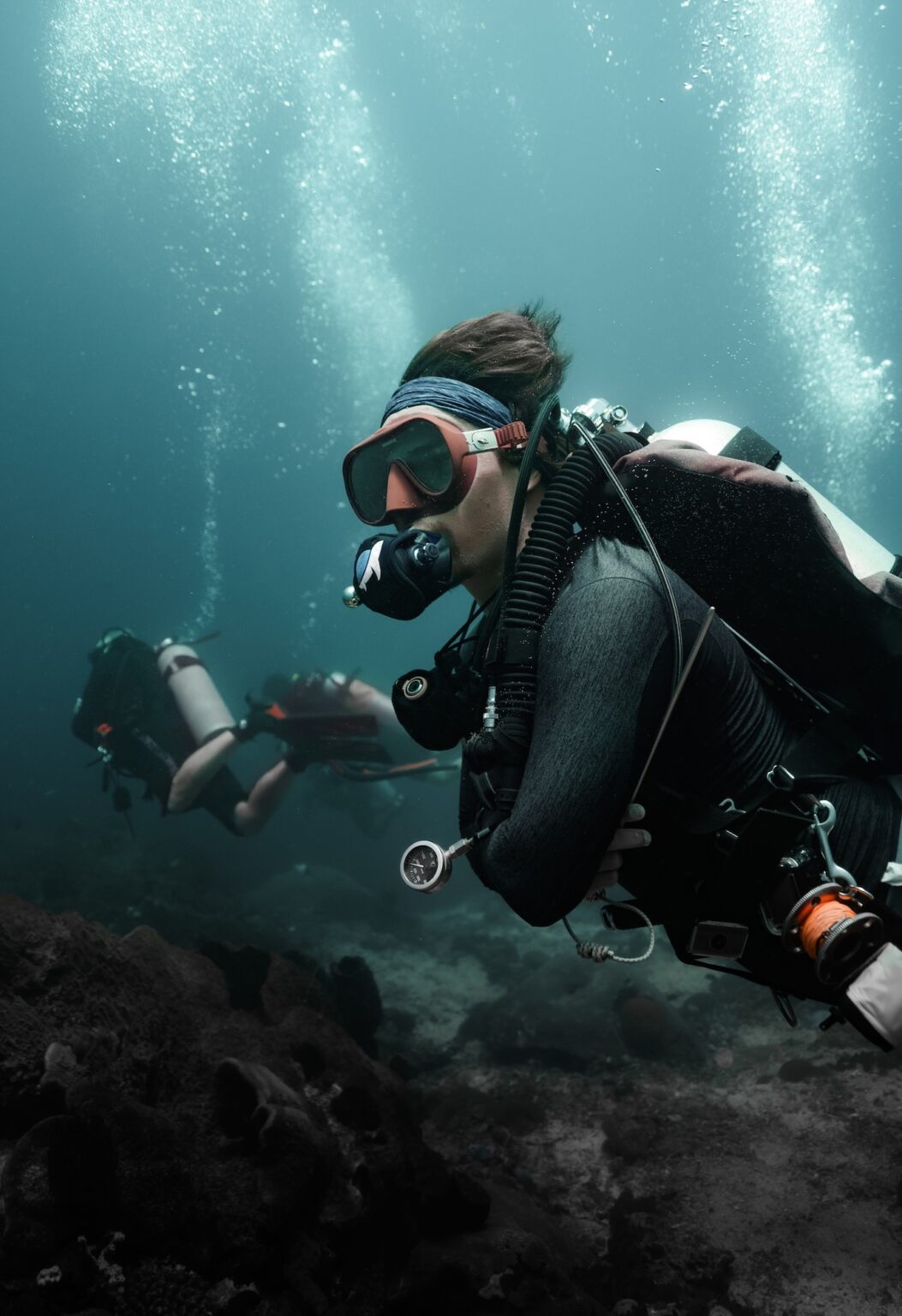
What kind of diver this pathway is meant to produce
The goal is not just to produce someone who can say they are certified. The goal is to produce someone genuinely stronger.
That means a dive professional with better technique, better awareness, stronger academics, more mature judgment, more confidence in leadership roles, and a real foundation in conservation. Someone who can take feedback, handle challenge, make decisions under pressure, and keep developing after the course is finished.
More broadly, this pathway is meant to help produce the next generation of diving conservationists.
That means empowering people who care about the ocean but have not yet found a practical way to contribute. It means making ocean conservation more accessible. It means giving people the credentials, structure, and foundation that help them move toward bigger goals, whether that is working in diving, contributing to conservation, pursuing further study, or starting something of their own.
For many candidates, Divemaster is not the end goal. It is the next step toward instructor training and a more serious professional path.
And for candidates already thinking one step ahead, the natural continuation may be our Dive Instructor Course in Bali.
Final decision: choose the structure, not the label
If you are already a very experienced diver with strong watermanship, real confidence, and something close to professional readiness already in place, then a short Divemaster course in Bali may be enough to formalise what you already know.
But for most people, that is not the reality.
For most people, a stronger Divemaster internship Bali pathway is the one that gives enough time, support, mentoring, repetition, and structure to build real competence. That is especially true if your goal is not just to get certified, but to become genuinely capable, employable, and ready for the demands of professional diving.
So when you compare options, do not get distracted by the label.
Ask what the structure is. Ask how the training is delivered. Ask how much mentorship you get. Ask how seriously standards are treated. Ask whether the program is designed to build you, or just sign you off.
Choose the structure that will make you a better diver, not the label that sounds best on a sales page.
If you want a pathway that focuses on real skill development, strong mentorship, conservation depth, and long-term professional growth, explore our Conservation Divemaster Course in Bali. If you are unsure which route fits your current experience and goals, you can also contact Project Laut and we can help you compare the best option.
Frequently Asked Questions
What is the difference between a Divemaster internship and a Divemaster course in Bali?
A Divemaster course is the formal certification framework you need to complete in order to become certified. A Divemaster internship is usually a broader training pathway built around that framework, often with more time, more immersion, more support, and more practical development. In Bali, however, the terms are often used loosely, so the real issue is not the label but the quality and structure of the training.
Are Divemaster internships in Bali free?
Usually, no. This is one of the biggest misunderstandings. Many people hear the word internship and assume it means unpaid work, paid work, or a work-exchange setup. In most cases, a Divemaster internship in Bali is still a paid training program, and the student is still the customer.
Is a short Divemaster course in Bali a bad idea?
Not always. A short course can make sense for someone who already has a lot of experience, strong watermanship, and is essentially formalising skills they already have. For most people, though, a very short course does not leave enough time to develop the leadership, judgment, and confidence needed to become a genuinely strong dive professional.
What should I look for in a good Divemaster internship in Bali?
Look for strong mentorship, small groups, clear structure, proper pool and practical skills work, solid academics, honest assessments, and a training culture that values standards over speed. A strong program should feel like real development, not just a checklist leading to sign-off.
What are red flags in a Divemaster internship?
Big red flags include “free internship” marketing, vague shadowing with no real curriculum, using trainees as cheap labour, rushing the course, weak academics, very little pool work, and putting Divemasters in training into guest-facing roles before they are actually ready.
Why is Nusa Penida a strong place to do Divemaster training?
Nusa Penida offers a more demanding dive environment than many easier training locations. Drift, changing currents, colder water, swell, and exposed sites can all force future dive professionals to make better decisions, manage groups more actively, and learn real judgment under supervision.
Does conservation training help with Divemaster development?
Yes. Conservation knowledge makes a dive professional more rounded, more informative, and often better at helping guests engage with the underwater world. It also creates a pathway for people who want to combine diving with restoration, ecology, education, or future conservation work.
Should I choose PADI or SSI for my Divemaster in Bali?
Agency matters, but usually less than people think. Instructor quality, structure, standards, and mentorship matter more. The better question is not just which agency you choose, but how well the program is taught.