
Short Marine Conservation Courses in Bali
Meaningful short marine conservation courses in Bali built around diving, ecology training, and real conservation participation in Nusa Penida. These short conservation programs are designed for divers who want a lower-commitment route into Project Laut’s fieldwork without joining a full professional training pathway.
Short Marine Conservation Courses In Bali with Real Field Participation
These short marine conservation courses in Bali are designed for divers who want meaningful time in the water, real participation in Project Laut’s conservation work, and a more accessible commitment than a full professional program. They combine diving, ecology training, and hands-on field experience in Nusa Penida in formats ranging from two to six weeks.
Choose Your Short Marine Conservation Course in Bali
These short marine conservation programs are designed for divers who want meaningful conservation participation, structured learning, and bundled diving without committing to a full professional pathway. Depending on the program length and conditions, participants can expect regular diving, ecology-focused learning, and hands-on involvement in Project Laut’s field activities.
2 Weeks
Coral Restoration Foundations
A focused short marine conservation course combining diving with daily conservation participation, hands-on coral restoration skills, and direct exposure to reef fieldwork in Nusa Penida.
Includes: SSI Coral Identification + diving + daily conservation participation
$699
3 Weeks
Coral Restoration & Fish ID Immersion
A longer field-based marine conservation course in Bali with more diving, broader participation in Project Laut’s daily activities, and added reef fish identification and ecology training.
Includes: Everything above + SSI Fish Identification
$999
4 Weeks
Ecology Field Experience
A broader marine ecology course in Bali combining diving, daily conservation participation, and a more complete introduction to Project Laut’s core marine ecology and fieldwork activities.
Includes: Everything above + SSI Sea Turtle Ecology
$1299
5 Weeks
Extended Ecology Immersion
A deeper short-course option with more time in the field, more diving, and broader participation across Project Laut’s ongoing marine conservation work in Nusa Penida.
Includes: Everything above + Project Laut T-Shirt
$1599
6 Weeks
Conservation Diver Pathway
A longer marine conservation diving course in Bali with more time in the field, more dives, and broader participation across Project Laut’s daily conservation activities, including coral reef restoration.
Includes: Everything above + SSI Coral Reef Restoration
$1899

What You’ll Learn on Our Short Marine Conservation Courses In Bali
Participants in our short marine conservation courses in Bali take part in Project Laut’s ongoing fieldwork through practical activities that build ecology knowledge, in-water confidence, and real conservation understanding over time. Longer stays allow deeper immersion across coral restoration, fish surveys, and turtle identification, while shorter programs offer a strong introduction to these core conservation areas.
Coral Reef Restoration
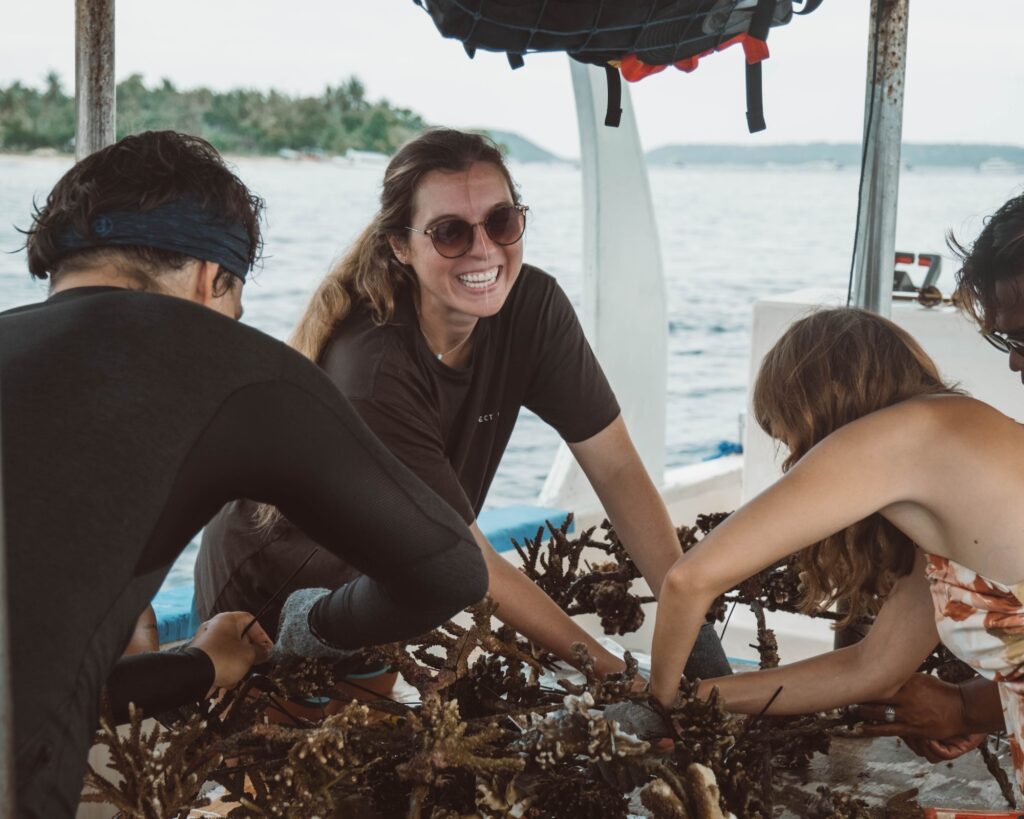
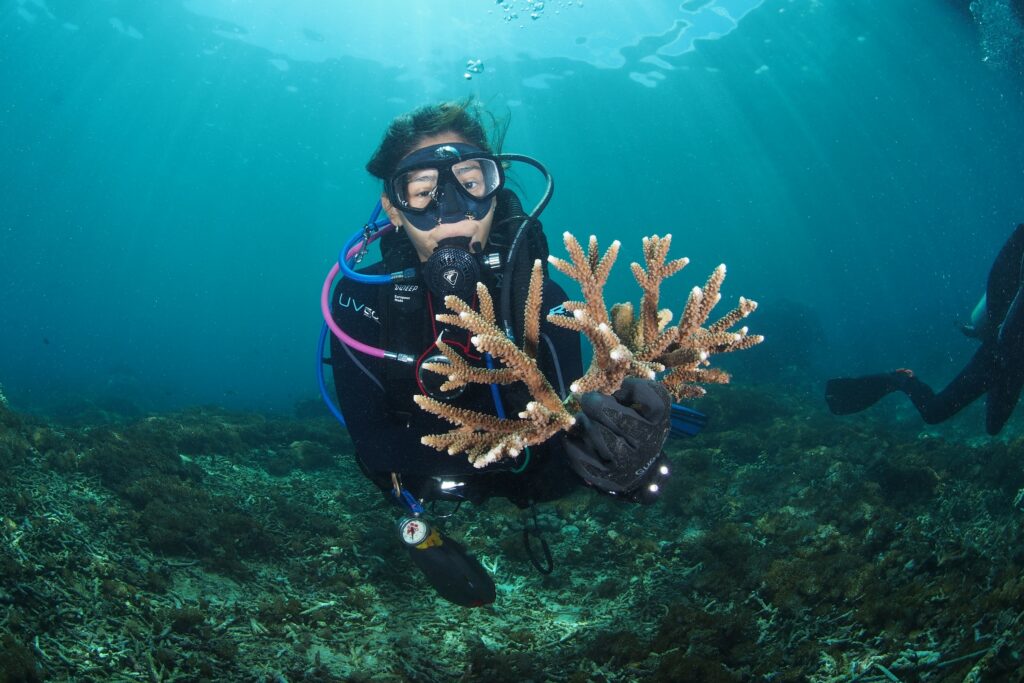
Participants take part in hands-on coral reef restoration through Project Laut’s ongoing fieldwork, learning practical methods such as coral selection, attachment, maintenance, and site care in partnership with GoOcean.
Longer stays allow more repetition and a deeper understanding of how restoration sites are maintained over time, while shorter courses provide a strong introduction to the work.

REEF.org Roving Fish Surveys
Participants build fish identification skills through species recognition, field observation, and REEF.org roving fish surveys integrated into the program.
Longer stays create more time to strengthen identification ability and survey confidence, while shorter pathways offer an introductory look at how reef monitoring is carried out in practice.

Sea Turtle Identification
Participants are introduced to turtle monitoring through sighting logs, individual identification, and Project Laut’s long-term fieldwork methods.
Longer stays allow more time to build familiarity with the identification process and how repeated sightings become useful conservation data, while shorter courses provide an introduction to the monitoring system and its purpose.

Prerequisites and Preparation
These short marine conservation courses in Bali are designed for divers who are already comfortable in the water and ready to take part in active fieldwork in Nusa Penida. If you are not yet at the required level, Project Laut can help you prepare with a short pre-course training pathway before your program begins.
Prerequisites
These short courses are designed for divers who are already comfortable in the water and ready to take part in active fieldwork in Nusa Penida’s conditions.
- Advanced Open Water Certification or equivalent
- Minimum 20 logged dives
- Comfortable carrying dive gear on and off the boat
- Suitable physical condition for active field participation
Preparation Options
If you are not yet at the required level, Project Laut can help you prepare before your short course begins so you enter the field confidently and safely.
- Open Water
- $349 3 Days | 4 Dives
- Advanced Open Water
- $299 2 Days | 5 Dives
- Scuba Refresher
- $179 2 Days | Pool + 2 Dives
Preparation courses should be scheduled before your short course start date.
Testimonials from Our Marine Conservation Course Participants
A look at how past participants describe the experience.
I joined Project Laut for a shorter marine conservation course in Bali and ended up getting much more out of it than I expected. It never felt like a surface-level experience. The diving was structured, the conservation work felt real, and I came away with a much better understanding of what field-based marine work actually looks like in practice. Even in a shorter format, it felt meaningful, well run, and worth the time
Jennifer Gordon, Canada
Project Laut Short Course Participant, 2025
Find The Right Marine Conservation Course In Bali For You
Get in touch to compare the short-course options, ask questions, and choose the marine conservation course in Bali that best fits your time, experience, and goals.
Frequently Asked Questions
What is included in Project Laut’s marine conservation courses in Bali?
Project Laut’s marine conservation courses in Bali combine ecology education, diving, and active participation in real conservation work in Nusa Penida. Rather than treating conservation as something separate from the diving, the courses are built so that learning and field participation support one another throughout the program.
Depending on the length of the course, participants can complete ecology certifications such as:
SSI Coral Identification
SSI Fish Identification
SSI Sea Turtle Ecology
SSI Coral Reef Restoration
Alongside the ecology certifications, participants also take part in diving and general participation in Project Laut’s conservation activities. These include coral reef restoration, fish surveys in partnership with REEF.org, and sea turtle photo identification. The result is that Project Laut’s marine conservation courses in Bali feel like structured short-term pathways with real substance, rather than simply a few dives with conservation-themed add-ons.
What are the different marine conservation courses in Bali offered by Project Laut?
Project Laut offers marine conservation courses in Bali in a short-course format ranging from 2 to 6 weeks, with longer stays also possible for groups or participants who want more time in the field.
These courses are designed for people who want to combine diving, conservation learning, and practical marine field experience in a shorter and more accessible format than a full professional pathway. That makes them especially well suited to small to medium-sized groups, gap-year style participants, students, or divers who want meaningful project involvement without committing to a much longer program.
Each of the marine conservation courses in Bali builds on the one before it. Shorter stays provide a more introductory experience, while longer stays allow deeper integration into Project Laut’s conservation pillars, more diving, and a broader ecology training experience. This creates a clear progression while still allowing people to choose the timeframe that fits them best.
Do I need to be an advanced diver to join marine conservation courses in Bali?
Yes, Project Laut normally asks that participants joining the marine conservation courses in Bali are at least Advanced certified and have around 20 logged dives. This helps ensure that people are comfortable enough in the water to get the most out of their time in Nusa Penida and participate more effectively in the field-based activities.
That said, if someone is interested but is not yet Advanced certified, that does not automatically stop them from joining. In many cases, the Advanced course can be added at the beginning before the short conservation course starts properly. That way, participants can still prepare on-site and then move into the program at the right level.
For Project Laut, the most important qualities are not just certification level, but also passion, willingness to learn, and willingness to contribute. The certification requirement exists so that participants can safely and confidently engage with the diving environment and conservation activities, not to make the courses unnecessarily exclusive.
How much real conservation work is included in the marine conservation courses in Bali?
A real amount of conservation participation is included in Project Laut’s marine conservation courses in Bali, but the depth of that participation depends on the length of the course.
At the shorter end, such as a 2-week stay, the experience is more of an introduction or sampler. Participants are exposed to the broader structure of the projects and begin taking part in the field-based work, but naturally have less time to build repetition and deeper familiarity.
At the longer end, especially the 6-week course, participants are able to move into much fuller participation and integration across Project Laut’s three main conservation pillars. Between those two points, there is a continuum: the longer the stay, the deeper the immersion, repetition, and confidence in the project work.
That means the marine conservation courses in Bali are honest in how they scale. Even shorter courses are meaningful, but longer courses give participants far more time to settle into the work and understand how the projects actually function over time.
What conservation activities will I actually take part in during the course?
Project Laut’s marine conservation courses in Bali are built around three main conservation pillars, each of which gives participants a different kind of field experience in the water.
The first is coral reef restoration, where participants are introduced to methods such as coral attachment, maintenance work, and the practical processes involved in supporting the long-term development of restoration sites. The second is REEF.org fish surveys, which help participants build fish identification skills and understand how observation and repeat survey methods contribute to useful reef monitoring. The third is sea turtle photo identification, where participants learn how repeated sightings and identification methods can help build longer-term understanding of individual animals and monitoring data.
Together, these three pillars mean that the marine conservation courses in Bali are not just about seeing conservation from the outside. Participants engage with restoration, monitoring, and ecology in ways that help them understand how marine conservation work is actually carried out in practice.
Will shorter marine conservation courses in Bali still let me experience all parts of the conservation program?
Yes, but in a more introductory way.
Shorter marine conservation courses in Bali still give participants exposure to the broader structure of Project Laut’s conservation work, including the three main pillars of coral reef restoration, fish surveys, and sea turtle identification. That means participants can still get a feel for the overall conservation model even in a shorter stay.
However, shorter courses do not offer the same level of immersion as longer ones. A shorter course is more likely to introduce participants to the different parts of the program, while a longer course gives them more time to repeat activities, build confidence, and understand how the work develops over time.
So the answer is yes: shorter marine conservation courses in Bali still provide meaningful experience across the program, but the longer pathways allow a much deeper level of integration and participation.
Can I prepare first if I am not yet at the required dive level for the marine conservation courses in Bali?
Yes. If you are interested in Project Laut’s marine conservation courses in Bali but are not yet at the required dive level, there are two main ways to prepare.
The first is to complete the necessary course, such as Advanced Open Water, in your local area before coming to Bali. The second is to arrive and add the Advanced course at the start before beginning the conservation short course itself.
Project Laut places importance on this because the local diving environment is built around coral-based reefs with occasional drift conditions, and participants need to be comfortable enough in the water to engage confidently and safely with the conservation activities. The aim is not to create barriers, but to make sure everyone arrives ready to get the most out of the fieldwork.
So yes, there is flexibility. If you are motivated and serious about joining the marine conservation courses in Bali, there are clear ways to prepare first and then enter the program properly.
What makes Project Laut’s marine conservation courses in Bali worth the investment?
Project Laut’s marine conservation courses in Bali are worth the investment because they are designed to deliver far more than a short-term volunteer-style experience.
Participants are investing in a structured course that combines diving, ecology education, and active project participation in one of Indonesia’s most compelling marine environments. Instead of simply observing conservation from a distance, participants are taught how to engage with restoration work, monitoring systems, and marine field methods in a way that is practical and educational.
There is also real value in the small-group structure, the dedicated guidance, and the chance to learn in an environment where conservation is already built into the daily rhythm of the operation. For many people, that creates a much more meaningful short-course experience than a generic dive holiday or a surface-level conservation program.
In the end, the value of Project Laut’s marine conservation courses in Bali comes from the combination of diving, learning, field participation, and personal growth. It is an investment in your own skills, your ecological understanding, and your experience in the marine environment.ing ability, your ecological understanding, and your long-term professional foundation.