Why Train As A Divemaster In Bali?
Choosing the right SSI or PADI Divemaster course in Bali is more than picking a logo on your c-card. It decides how fast you log dives, what gear you’ll need, and where your first paid job might be. Below, you’ll get a concise, side-by-side breakdown of entry requirements, true costs, training style, and long-term earning potential – so you can commit with confidence. Also see our wider piece on How To Choose The Best Divemaster Course in Bali: What Actually Matters.
Table of Contents
Agency Snapshot: PADI Divemaster Course vs SSI at a Glance
Certification Reach & Global Recognition
- PADI: 6 600 Dive Centres/Resorts and ≈ 128 000 active professionals in 184 countries, making it the largest training body in absolute numbers.
- SSI: 3 500 Training Centres/Resorts and over 100,000 active professionals in 150+ countries and the fastest-growing agency worldwide, particularly across Europe and Southeast Asia.
- Standards parity — Both agencies conform to the ISO 24801 / 24802 recreational-diver standards and the World Recreational Scuba Training Council (WRSTC) minimum-training requirements, so either any recreational diving certification card is accepted by liveaboards, insurers and dive operators globally.
Teaching Philosophy, Digital Materials & Support Tools
PADI Divemaster Course | SSI Divemaster Course | |
|---|---|---|
Educational Approach | “Performance-based”: once a skill and the written exam are completed, you move on. | “Comfort through repetition”: skills are repeated until mastered, allowing instructors to adapt pace and sequence. |
Digital Ecosystem | eLearning available, but many programmes still rely on printed crew-packs | MySSI App gives 24/7 offline access to 30 + languages, free digital logbook and lifelong e-cert cards. |
Learning Aids | Primarily text-based; mobile exams exist but are platform-specific. | In-app AI study assistant for instant clarifications; exams are fully mobile-friendly and can be taken in preferred language. |
Student Extras | Digital logbook optional; replacement cert cards incur fees. | Free lifetime logbook & e-cards stored in the app. Free access to standards and entry-level course material. |
Course Flexibility | Highly standardised; changing sequence requires regional approval. | Standards allow instructors to reorder modules or add extra training dives |
Take Away
PADI’s size guarantees instant name recognition, but SSI’s adaptive “comfort through repetition” model and fully integrated digital platform deliver more flexible training and a smoother student experience—especially in multilingual, remote settings like Bali.
Entry Requirements & PADI Divemaster Course Prerequisites
Logged-Dive Minimums, Swim-Test Times & Age Limits
Comparison Point | SSI Divemaster Course | PADI Divemaster Course |
|---|---|---|
Minimum Age | 18 yrs | 18 yrs |
Logged Dives On Arrival | ||
Prerequisite Specialties | Stress & Rescue and React Right plus either: | Open Water → Advanced → Rescue sequence; no specific deep/night/navigation dives mandated |
Water Fitness Evaluation | 15-min tread (no aids) | 400 m swim (any stroke, no aids) |
Read more about Divemaster Swim Test requirements, and how to prepare for your Swim Test here!
Why This Matters
SSI’s water-fitness block is shorter in distance but performed without snorkel or fins, and its tow must be completed in eight minutes—skills closely mirroring real diving scenarios. PADI’s Divemaster Course water fitness test has a longer snorkel swim and it’s 15-minute float emphasizes endurance. Both agencies require proof of 60 dives before final certification, ensuring graduates have comparable in-water mileage.
Medical, CPR/First-Aid & Nitrox Expectations
Comparison Point | SSI | PADI |
|---|---|---|
Medical clearance | Physician’s Approval to Dive dated ≤ 12 months before any in-water training; candidates must resubmit if health changes | Diver Medical Form signed by physician ≤ 12 months before program start |
CPR / First-Aid currency | SSI React Right (First Aid + O2) or equivalent, valid 2 years; refresh via React Right Update. | CPR + First-Aid taken within 24 months (Emergency First Response or equivalent). |
Nitrox credential | Not mandatory but strongly recommended; many SSI centres bundle Enriched Air in the pro package. | Also optional, yet encouraged for better employability; separate add-on at most PADI centres. |
Oxygen-provider training | Built into React Right syllabus—no extra fee. | Not a prerequisite; often sold as a separate “O2 Provider” speciality. |
Take-away: Both agencies demand similar age, medical and CPR currency, but SSI folds oxygen-provider skills and a flexible React Right refresh into its two-year cycle, saving you an extra specialty fee. Meanwhile, PADI’s entry ladder is more prescriptive (OW → AOW → Rescue) but doesn’t stipulate night/deep/navigation dives—experience you’ll likely need anyway for jobs in Nusa Penida’s varied conditions.
Course Duration & Typical Divemaster Course Schedule in Bali
A “PADI Divemaster course” (or SSI equivalent) can last anywhere from 2 weeks to 6 months in Indonesia, and the length usually tells you whether you’re paying for training or working off the cost.
Model | Common Duration | What Your Days Look Like | Hidden Trade-Offs |
|---|---|---|---|
Express / Fast-Track | 14-15 days if you already hold Rescue + ≥45-50 dives. | Six-day dive weeks & workshops | ✔ Quick certificate. |
Standard Internship | Alternating “student days” with shadow-guiding dives. 40–60-hour weeks. | ✔ Balanced learning + logged dives. | |
“Free” or Unpaid Internship | 2–6 months; dive centre recoups costs by having you haul tanks, fill compressors, guide snorkelers, and work very hard for long hours. | 6–10-hour days, learning on the fly | ✔ Low cash outlay. |
Project Laut SSI Divemaster + Conservation | 8 – 14 weeks depending on entry level |
| ✔ 100+ dives, advanced workshops, conservation resume lines. |
A Typical Week At Project Laut’s Conservation Divemaster Course
Day | Morning | Afternoon | Evening |
|---|---|---|---|
Tuesday | Two boat dives (Deep + Navigation workshop) | Coral-fragment cleaning on restoration site (Maintenance Dive) | Digital log debrief |
Wednesday | Rescue-scenario drills | One turtle identification dive | Turtle ID photo sorting & processing |
Thursday | House-reef mapping dives | Nitrox theory & exam | Yoga/rest |
Friday | Conservation lecture (3-D photogrammetry) + Data entry with marine biologists | Two boat dives (Buoyancy Workshop + Skills practice) | Beach clean up, sunset BBQ bonfire social |
Saturday | DSMB + Briefing practice in the pool | Two coral restoration dives (coral attachment and structure placement) | Night Dive on restoration site |
Sunday | Rest or optional fun dives | – | – |
Monday | Rest or optional fun dives | – | – |
Take-away: a two-week PADI Divemaster course can stamp a cert quickly, but if you want career-ready skills, SSI’s comfort-through-repetition philosophy plus Project Laut’s 8-14-week Conservation Divemaster Course schedule deliver far deeper mastery – and add conservation credentials recruiters now look for.
PADI Divemaster Course Vs SSI Cost Comparison: Tuition, Materials & Hidden Fees
Course Fees, Professional Activation, and Gear Rental Processing Fees (divemaster course cost)
Comparison Point | PADI Divemaster Course | SSI Divemaster Course |
|---|---|---|
Base course fee (typical Bali 4-6 wk package) | ≈ US $2 300 | ≈ US $1 700 |
Training materials | PADI “Divemaster Crew-Pack” US $300–$600 (includes the one-time DM sticker—lose it and you repurchase the pack) | SSI Divemaster kit US $40 – binder + briefing slate |
Professional activation (paid after course) | US $180 | |
Gear rental during course | Common add-on US $250–400 / month (many centres require own gear) | Frequently included in SSI packages; where rental is extra, rates are lower because digital kit already covers slates & logbook |
Typical true-cost to certification | ≈ US $2 800 + gear rental | ≈ US $1 840 all-in |
Take-away: SSI’s lower material price and smaller pro-activation fee slice roughly US $900–1 000 off the path to your first professional card – before you even factor annual renewals or cost of gear rental!
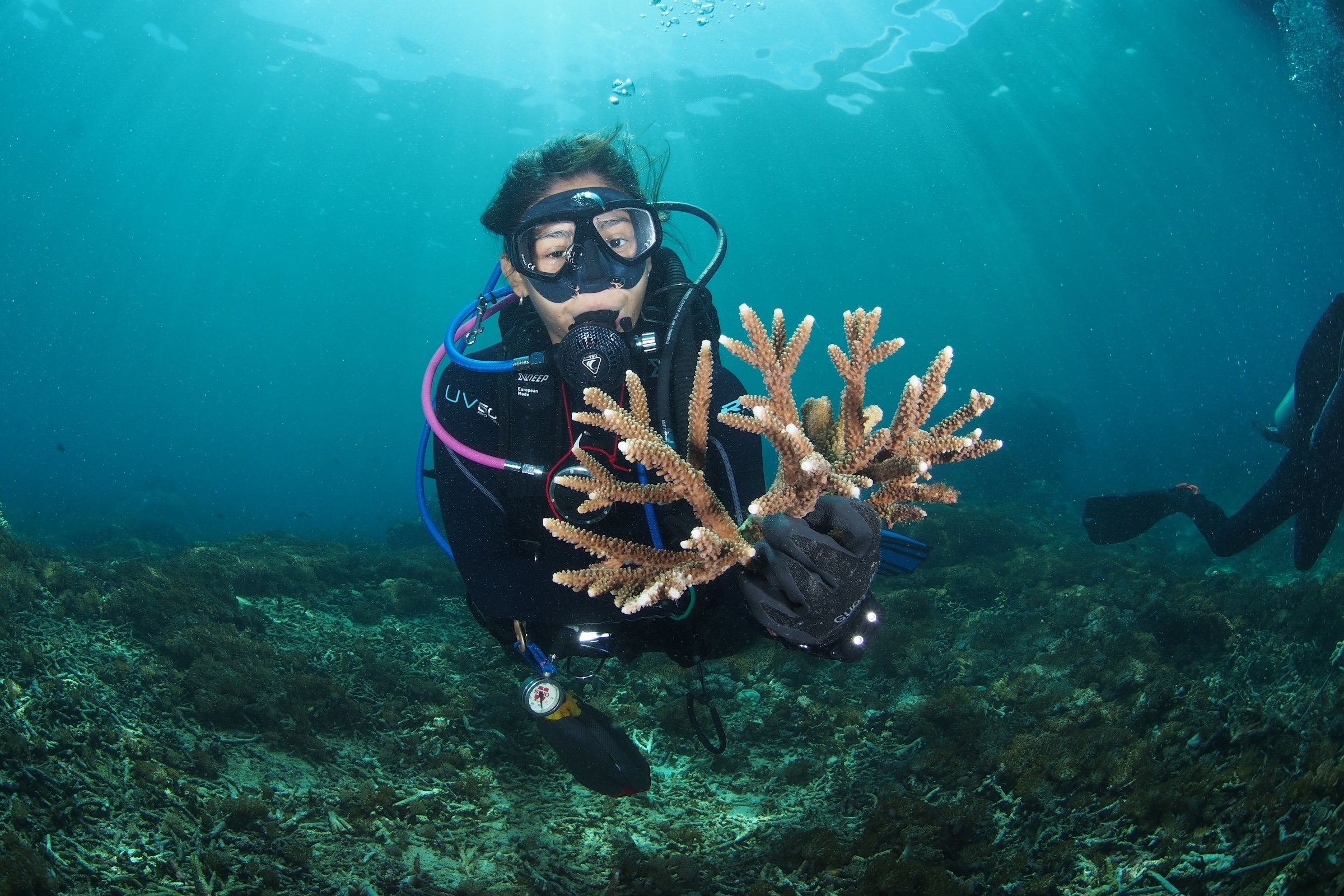
Want more than a card? See how our Extended Conservation Divemaster Course layers coral-restoration labs and 100+ dives onto the SSI track.
Annual Renewal
Annual pro-membership fees
Agency | Year One Activation | Every Year Renewal |
|---|---|---|
PADI Divemaster Course | US $180 activation | US $250 standard renewal |
SSI Divemaster Couse | US $100 activation | US $85 renewal — often offset by SSI “Reward Points” earned while teaching |
Over a five-year career the membership delta adds up to ≈ US $800–1 000 in SSI’s favour.

Living Costs in Bali
Typical monthly living costs on Nusa Penida (2025)
Item | Estimate |
|---|---|
Private bungalow room | ≈ US $220 / month |
Scooter rental (110–125 cc) | ≈ US $70 / month |
Food, SIM, laundry & incidentals | ≈ US $300 / month for a modest lifestyle |
Career Outcomes & PADI Divemaster Course Salary Expectations
Typical Entry Roles & Pay Bands (Asia / Australia / Europe / Liveaboard)
Region / Sector | Job Title | 2025 Pay Band* | Notes |
|---|---|---|---|
Indonesia / SE-Asia | Dive Guide or DM-Deckhand | US $650 – 1 300 mo incl. tips | Foreigners rarely obtain a KITAS work visa as divemasters; Indonesian law requires you to be hired for a “skilled” role – usually Instructor. |
Australia (GBR, Ningaloo) | Divemaster → Boat Crew | AUS $45 k yr entry; > AUS $63 k once Instructor | English-language market, high bar for customer service. |
EU Seasonal (Greece, Italy, Spain) | Seasonal DM / SSI Guide | €900 – 1 400 mo + accommodation | SSI footprint is strong; many centres advertise “SSI DM wanted May–Oct.” |
Global Liveaboards | Cruise DM (guide + gear room) | US $3 k – 5 k mo incl. tips | 100-hr weeks but rapid logbook growth & networking. |
Averages compiled from 2024–25 job boards and recruiter posts; tips/commissions vary widely.
Two common post-cert routes
- Season & Experience – take a 4- to 6-month contract (Mediterranean, Red Sea, Thailand) to rack up real guiding hours and references.
- Straight to Instructor – invest immediately in an Dive Instructor Course In Bali, then target higher-pay positions in Asia, Australia, liveaboards or EU 5 ★ resorts.
If you are thinking beyond Divemaster and planning to become an instructor, the agency comparison becomes more detailed. We cover that next step in our full guide to the PADI vs SSI instructor course.
If you are already looking beyond Divemaster and comparing pro-level pathways, read our guide on how to choose the best dive instructor course in Bali.
Fast-Track Path to Instructor (Zero-to-Hero ladder)
Stage | Logged Dive Milestone | Typical Duration | Visa/Employability Impact |
|---|---|---|---|
Open Water → Rescue | 40 dives | 4-6 weeks | Foundational Skills |
Rescue → Divemaster | 70 dives | 6-8 weeks | Eligible for entry-level guiding jobs outside Indonesia |
Divemaster → Instructor (ITC/IDC) | 100 dives | 15 day fast track or 4 week intensive (with additional instructor certifications) | Meets Indonesia KITAS “skilled role” rule; doubles salary band |
Zero-to-Instructor (complete) | ≈ 100–120 dives | 4 – 5 months | Opens door to full pro visas world-wide |
Most agencies require you to have had your Open Water certification for more than 6 months before you are eligible to begin an instructor course
Take-away: A Divemaster card gets you seasonal work and a starter wage, but upgrading to Instructor is often mandatory for a legal KITAS in Indonesia (and other countries) and nearly doubles earning power in Asia, Australia, or the EU. If you want a straight shot from Rescue to high-pay Instructor – plus reef-conservation credentials – check out our Extended Conservation Divemaster Course and Fast-Track-to-Teach Instructor pathways.
Read more about Zero-To-Hero-Divemaster Programs in Bali
Which Agency Fits Your Goals? – Decision Checklist
“I only learned to blow bubbles last year—now everyone’s talking about PADI and SSI. Which path actually fits my budget and dream job?”
Use these quick questions to steer yourself.
Decision Checklist
Ask yourself… | If you answer “Yes”… | What that means |
|---|---|---|
“I want the biggest brand name on my résumé.” | Choose PADI. It’s the oldest agency and you’ll see the logo in nearly every dive shop from Florida to Fiji. | Brand comfort helps when you’re applying in the U-S or resorts.” |
“I’m want great value for money” | Choose SSI. The standard Divemaster course is about US $1400 cheaper all-in and pro-renewals are roughly a third cheaper every year. | Less money on course fees leaves more cash in your wallet for additional training options |
“I’d love to study on my phone – offline – and maybe in another language.” | SSI. The free MySSI app stores all manuals in 30+ languages, tracks dives, and even has an AI tutor. | Handy for Bali Wi-Fi dropouts or if English isn’t your first language. |
“Flexibility matters – I want conservation dives or a custom schedule.” | SSI. Its “comfort through repetition” standard lets instructors rearrange course schedules around the student | Ideal if you like learning by doing, not by racing through a checklist. |
“I need paid work fast – where are the jobs?” | • USA / Latin America? More PADI posts. | Matching agency to region saves you from a “Sorry, wrong affiliation” email. |
“Long term I want to become an Instructor” | SSI’s upgrade costs less | Going SSI can shave US $3000 off the Zero-to-Hero Instructor journey. |
Bottom Line Cheat Sheet
- PADI = Biggest logo, higher price, fixed syllabus – great if you plan to job-hunt in PADI-heavy zones.
- SSI = Smaller price tag, phone-friendly learning, flexible teaching flow – perfect for Europe, SE-Asia and anyone who values conservation add-ons.
Want the SSI route plus coral-restoration labs and a built-in step to Instructor? Dive into our Extended Conservation Divemaster Course and see how we turn that flexibility into real-world career fuel, or learn more about How To Choose The Best Divemaster Course in Bali.
Because agency is not the only thing that shapes your experience, we have also written a guide on the real difference between a Divemaster internship and course in Bali.
How to Enrol with Project Laut (Next Steps)
Upcoming Course Dates & Early-Bird Discounts
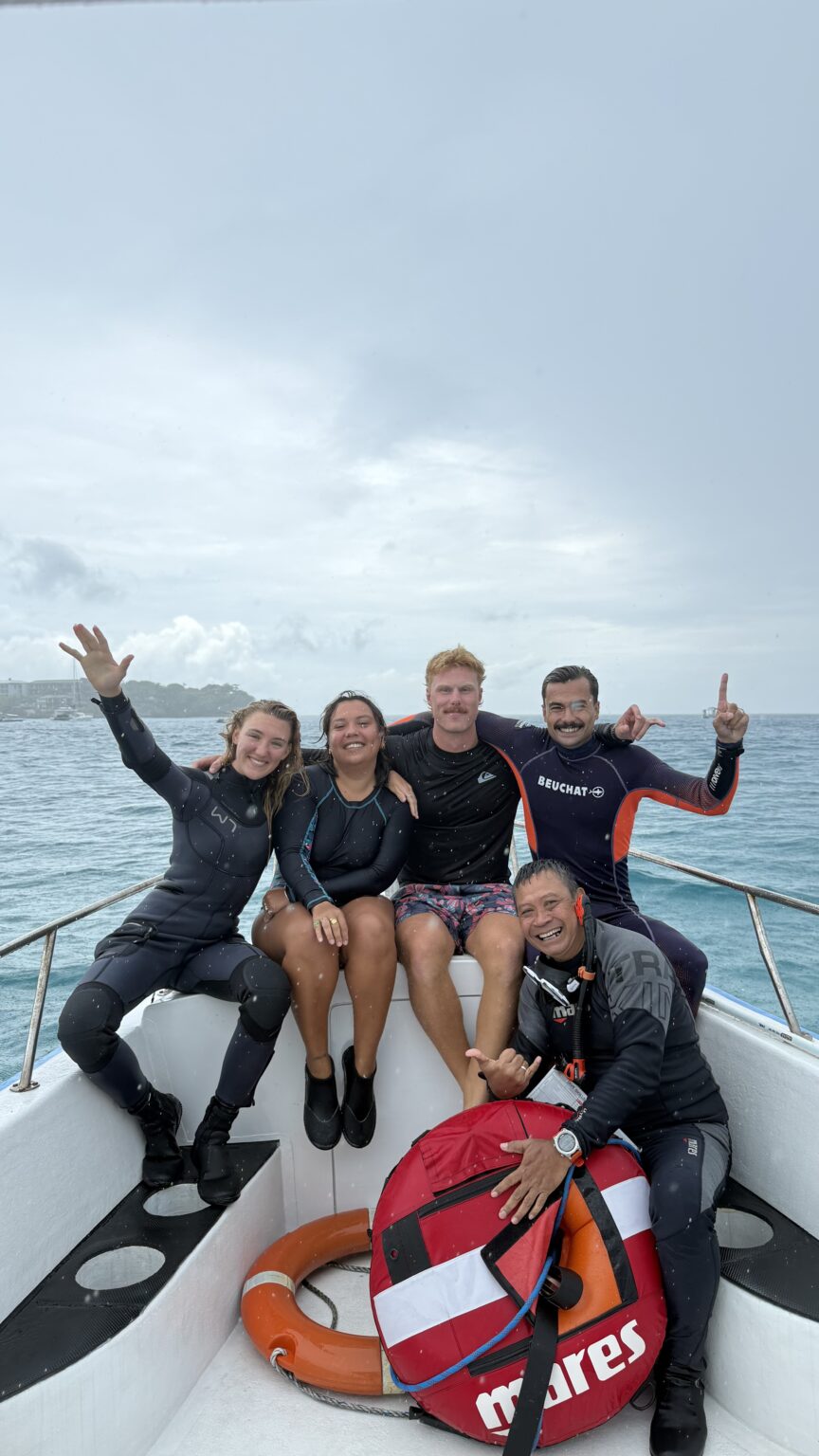
We run our SSI Conservation Divemaster Course on set intake dates all year and cap each cohort at 8 interns. This keeps the instructor-to-student ratio tight (3 instructors + 2 marine biologists) and guarantees you personalized coaching on every dive.
Because places disappear fast, the easiest way to lock in a start date is to email us at info@nusapenidadive.com or WhatsApp the team – we’ll have a phone/video interview to discuss specifics, and following this you will be asked to put a deposit down to hold your spot for your upcoming divemaster course adventure!
Early-bird offer:
- Reserve your seat on any upcoming intake.
- Add the Deep & Nitrox specialty package at sign-up.
→ 20 % off the total course ticket.
You can also bolt on extra SSI Ecology specialties (Shark, Manta, Coral ID, etc.) at a bundle-only rate that’s unavailable once the course begins.
Make sure to mention the early-bird offer when booking!
Apply Now
Ready to swap desk life for reef life?
• Check the latest course dates & information → Conservation Divemaster Course
• Fill out the short application form or drop us a message – we’ll confirm availability, early-bird pricing and next steps within 3 business days.
Secure your spot, grab the early-bird discount, and start counting down to the first dive.
FAQs – PADI Divemaster Course vs SSI
A complete PADI path usually runs US $2 800–3 200 once you add the crew-pack (about US $300) and the AUS $275 application fee. Gear rental is often extra. SSI’s equivalent averages US $1 800 because the digital kit is just US $40 and pro activation US $100.
Foreigners generally need an Instructor-level KITAS (work visa). Divemaster alone is rarely accepted. That’s why many graduates step straight into an SSI Instructor course – especially if they plan to stay in Indonesia. It is possible to find work in Australia, Thailand, Europe (Greece/Italy/Spain) and the US as a divemaster.
SSI gets you the same worldwide recognition for roughly US $1 000 less at Divemaster level, renews for only US $85 a year (PADI averages about US $250), and lets you upgrade to Instructor for around US $2 000 less – all while giving you a 30-plus-language offline app and a flexible “comfort-through-repetition” syllabus that adapts to real dive conditions. SSI is the better value for money, tech-savvy pathway – lower fees, more languages, adaptable teaching, no loss of quality.